 An official website of the United States government




The Division of Genome Sciences supports and accelerates foundational resources, technology development, experimental approaches, in basic genomics and functional genomics research. The Division also oversees a number of transformational initiatives and programs in genomic sciences.
Overview
The division supports and accelerates foundational resources, technology development, experimental approaches, data science and analytical tools that transform genome science to facilitate research on the function of the genome in human health and disease. In conducting its mission, the division also:
- Assesses the need for research and research training in genome sciences and related areas.
- Determines program priorities in genome sciences and related areas and recommends funding levels.
- Prepares reports and analyses to assist institute staff and advisory groups in carrying out their responsibilities.
- Collaborates with the other NHGRI extramural research divisions to establish a balance of resources, personnel, and research and training budgets to achieve NHGRI goals.
- Provides expert advice to the director of NHGRI on various aspects of genome sciences.
- Collaborates with the other NHGRI divisions, other National Institutes of Health Institutes and Centers, and other agencies and entities, nationally and internationally.
- Maintains an awareness of research efforts in relevant program areas.
Research Programs

Centers of Excellence in Genomic Science (CEGS)
The CEGS program supports multi-investigator, interdisciplinary research teams working together to address biomedical problems through development of integrated, transformative genomic approaches.
Genome Technology Program
Developing completely novel approaches and innovations to achieve orders-of-magnitude improvements and refining current technologies to increase efficiency and decrease cost while maintaining or improving data quality.

Developmental Genotype-Tissue Expression (dGTEx)
The goal of the dGTEx initiative is to establish a resource database and associated tissue bank to study gene expression patterns in multiple reference tissues during human and non-human primate developmental stages.

Genetic Architecture of Complex Traits
Building upon a foundation of quantitative genetics laid over a century ago, applying modern genomic approaches to resolve how genetic and non-genetic factors shape variation in human diseases and traits.
Human Genome Reference Program (HGRP)
The human genome reference is used by essentially all researchers who need to align and assemble experimental or patient genome sequence data. It also serves as a consensus coordinate system for reporting results.

Impact of Genomic Variation on Function (IGVF) Consortium
The IGVF will develop a framework for systematically understanding the effects of genomic variation on genome function and how these effects shape phenotypes.

Molecular Phenotypes of Null Alleles in Cells (MorPhiC)
MorPhiC aims to develop a consistent catalog of molecular and cellular phenotypes for null alleles for every human gene by using in-vitro multicellular systems.

Funding for New and Early Stage Investigators
One essential element of the NHGRI mission is supporting researchers through their early career stages, enabling them to make the next scientific breakthroughs in the field of genomics.
The GREGoR Consortium
The GREGoR Consortium is aimed at significantly increasing the proportion of Mendelian disorders with an identified genetic cause through enhanced data sharing, collaboration and an increased focus on the application of new technologies, sequencing strategies and analytical approaches.
The Encyclopedia of DNA Elements (ENCODE)
ENCODE is a public research consortium aimed at identifying all functional elements in the human and mouse genomes.
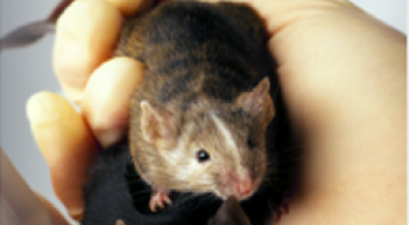
Knockout Mouse Phenotyping Project (KOMP2)
The Knockout Mouse Phenotyping Project (KOMP2) is a trans-NIH initiative that aims to generate a comprehensive and public resource comprised of knockout information for all protein-coding genes in the mouse genome.
Additional Programs
NIH Common Fund | U.S. National Science Foundation | Archived Programs |
Unsolicited, Investigator-Initiated Research
NHGRI strongly supports unsolicited, investigator-initiated research, which are funded under NIH-wide “parent” Program Announcements (PAs), as well as PAs or PARs targeting specific scientific topics. Investigator-initiated means you create an application in any area of science NIH supports.
To learn more about the research areas we support and the appropriate contacts, please visit the Content Map for Contacts by Research Area or the Contacts by Research Area: Search.
For more information, please visit NHGRI's Research Funding.
Funding Opportunities
- Supporting Talented Early Career Researchers in Genomics (R01 Clinical Trial Optional)
RFA-HG-25-009
Next Application Due Date: February 28, 2025
Expiration Date: February 27, 2027
- Advancing Genomic Technology Development for Research and Clinical Application (NOSI)
NOT-HG-24-012
Expiration Date: January 10, 2027
- Developing Novel Theory and Methods for Understanding the Genetic Architecture of Complex Human Traits (R01 Clinical Trial Not Allowed)
PAR-25-255
Application Due Dates: Standard Dates
Expiration Date: November 6, 2026
- Developing Novel Theory and Methods for Understanding the Genetic Architecture of Complex Human Traits (R21 Clinical Trial Not Allowed)
PAR-25-256
Application Due Dates: Standard Dates
Expiration Date: January 8, 2027
- Centers of Excellence in Genomic Science (RM1 Clinical Trial Optional)
PAR-23-098
Application Receipt Date(s): June 23, 2025
Expiration Date: June 24, 2025
Meetings, Workshops, and Reports
- Complex Trait Genetics Webinar Series: Re-analysis of Variance and Re-analysis of Causes
October 23, 2024 - Ancient Genetic Clues into Modern Human Disease Webinar
October 15, 2024 - Identifying Research Priorities to Accelerate Genetic Diagnosis
April 16-April 17, 2024 - Report of NHGRI Community Input: Functional Variant Interpretation
February 16-April 12, 2024 - Advances in the Genetic Architecture of Complex Human Traits
November 16-17, 2023 - 2023 NHGRI Cross-Consortia Day
September 13, 2023 - NHGRI Meeting on: Ethical Issues Associated with the Creation and Use of Induced Pluripotent Stem Cell (iPSC) Lines Derived from NHGRI-Supported Sample Collections (Executive Summary)
September 2, 2023 - 2022 Human Genome Reference Program Planning Meeting
October 13, 2022 - 2022 Advances Genomic Technology Development Annual Meeting
July 12-14, 2022 - Capturing RNA Sequence and Transcript Diversity – From Technology Innovation to Clinical Application
May 24-26, 2022 - 2021 Advanced Genomic Technology Development Meeting
May 25-27, 2021 - 2020 Advanced Genomic Technology Development Meeting
May 27-29, 2020 - Machine Learning in Genomics: Tools, Resources, Clinical Applications and Ethics
April 13-14, 2021 - Perspectives in Comparative Genomics and Evolution
August 15-16, 2019 - 2019 Advanced Genomic Technology Development Meeting
May 29-31, 2019 - Human Genome Reference Program Webinar
March 8, 2019 - From Genome to Phenotype: Genomic Variation Identification, Association, and Function in Human Health and Disease January 22-24, 2019
Division Staff



Alexander Arguello, Ph.D.
Program Director
Division of Genome Sciences


Colin Fletcher, Ph.D.
Program Director, The Knockout Mouse Project (KOMP)
Division of Genome Sciences

Temesgen D. Fufa, Ph.D.
Program Director
Division of Genome Sciences

Daniel A. Gilchrist, Ph.D.
Program Director
Division of Genome Sciences

Stephanie A. Morris, Ph.D.
Program Director
Division of Genome Sciences



Kris A. Wetterstrand, M.S.
Program Operations Lead
Division of Extramural Operations


Sarah Anstice, B.S.
Scientific Program Analyst
Division of Genome Sciences

Afia Asare, B.S.
Scientific Program Analyst
Division of Genome Sciences

Ben Cubert, M.S.
Scientific Program Analyst
Division of Genome Sciences

Sofia Martin, B.A.
Scientific Program Analyst
Division of Genome Sciences

Nicholas Nguyen, MHS, PA-C
Scientific Program Analyst
Division of Genome Sciences

Alessandra L. Serrano Marroquin, B.A.
Scientific Program Analyst
Division of Genome Sciences

Gabrielle Villard, B.S.
Scientific Program Analyst
Division of Genome Sciences

Ashley Smith
Support Staff
Division of Genome Sciences

Amalia M. Sobalvarro
Support Staff
Division of Genome Sciences