 An official website of the United States government




The National Human Genome Research Institute's (NHGRI) Division of Intramural Research plans and conducts laboratory and clinical research to enable greater understanding of human disease and develop better methods for detection, prevention and treatment of heritable and genetic disorders.
Overview
The NHGRI Division of Intramural Research is one of the premier research programs working to unravel the genetic basis of human disease. In its short existence, the division has made many seminal contributions to the fields of genetics and genomics.
Highlights of NHGRI investigators' accomplishments in recent years include the identification of the genes responsible for numerous human genetic diseases; development of new paradigms for mapping, sequencing, and interpreting the human and other vertebrate genomes; Development and application of DNA microarray technologies for large-scale analyses of gene expression; creation of innovative computational tools for analyzing large quantities of genomic data; generation of animal models critical to the study of human inherited disorders; and design of novel approaches for diagnosing and treating genetic disease.
NHGRI investigators, along with their collaborators at other NIH Institutes and various research institutions worldwide, have embarked on a number of high-risk efforts to unearth clues about the complex genetic pathways involved in human diseases. These efforts have used genomic sequence data from humans and other species to pinpoint hundreds of potential disease genes, including those implicated in cancer, diabetes, premature aging, hereditary deafness, various neurological, developmental, metabolic, and immunological disorders, and others. These studies have brought together NHGRI basic scientists and clinicians in collaborations aimed at developing better approaches for detecting, diagnosing, and managing these often-debilitating genetic disorders.
Organization and Structure
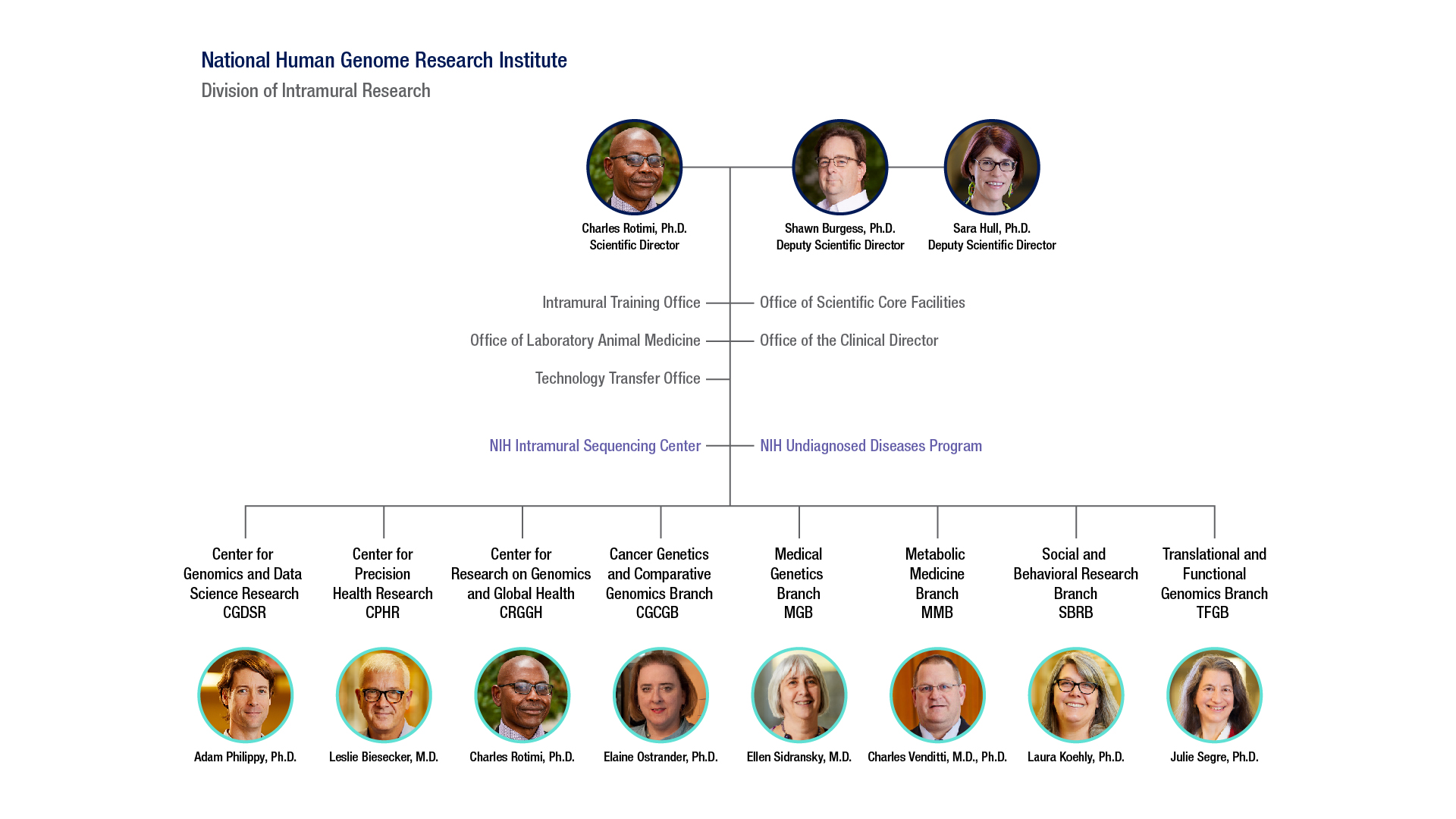
The division accomplishes its mission on the main NIH campus in Bethesda, Maryland as well as at other sites, including the Bayview campus in Baltimore, Maryland and the Twinbrook complex in Rockville, Maryland. The Division is led by the Scientific Director, with input from its Board of Scientific Counselors - a group that provides expert external oversight for all research and training ongoing in the NHGRI Division of Intramural Research. Clinical research is overseen by the Clinical Director, who provides guidance and support for all NHGRI investigators involved in patient-based research.
Each of the more than 50 NHGRI investigators are assigned to one of nine branches - although these boundaries are artificial in many ways, since there are significant interactions among investigators and trainees in different branches, as well as considerable overlap in their respective areas of research. NHGRI investigators have appointments similar to those at most academic research departments. About half are Senior Investigators; these individuals have tenured positions at NIH. Individuals currently in the tenure-track (but not yet tenured) are called Investigators. All Senior Investigators and Investigators lead sections, which are individual laboratories within the branches. Associate Investigators are akin to research and clinical-track faculty at universities, serving a variety of critical roles within NHGRI (but are not part of the NIH tenure system). Some Associate Investigators head units, which are their research laboratories. Finally, there are Adjunct Investigators, individuals with significant scientific interactions with NHGRI but whose primary appointment resides in another NIH institute. The NHGRI Division of Intramural Research also is supported by a number of other scientific and administrative entities, including a series of cores, centers, and offices.
Together, all of the elements of the Division of Intramural Research share a common aim - to deliver on the promise of genetics and genomics by connecting the base pairs of the Human Genome Project to the bedside of those afflicted with a genetic disease.
Administrative Offices and Advisors
The NHGRI Division of Intramural Research's administrative and advisory components provide leadership and operations in support of the division's scientific mission.
Administrative Offices and Advisors

Office of the Scientific Director
The Office of the Scientific Director (OSD) at National Human Genome Research Institute (NHGRI) provides leadership and managerial oversight for all research and related activities within the institute's Division of Intramural Research.

Office of the Clinical Director
The Office of the Clinical Director (OCD) provides oversight and guidance to NHGRI scientists working to develop better diagnostic methods, innovative therapeutic approaches and improved medical management strategies for genetic disorders.

Board of Scientific Counselors
The Board of Scientific Counselors previews and evaluates the intramural research programs of the National Human Genome Research Institute (NHGRI) and provides periodic technical and scientific peer review of the work of our research investigators.
Research Branches
The NHGRI Division of Intramural Research contains nine research branches, each organized around a specific area of scientific inquiry.
Cancer Genetics and Comparative Genomics Branch
The Cancer Genetics and Comparative Genomics Branch seeks to identify and study genes that contribute to cancer susceptibility and progression.

Center for Genomics and Data Science Research
The Center for Genomics and Data Science Research focuses on the development and application of computationally intensive approaches to analyze large-scale genetic and genomic data, with a particular focus on identifying genetic contributions to human disease.

Medical Genetics Branch
The Medical Genetics Branch (MGB) seeks to identify and understand inherited disorders of metabolism and of human development.

Center for Precision Health Research
The investigators in the Center for Precision Health Research (CPHR) develop and evaluate cutting edge genomic and informatic tools to improve the diagnosis, treatment and prevention of disease to foster next-generation healthcare.
Metabolic Medicine Branch
The Metabolic Medicine Branch (MMB) houses clinical and laboratory research programs that focus on the development of new therapies for patients with genetic disorders.

Social and Behavioral Research Branch
The Social and Behavioral Research Branch (SBRB) aims to develop optimal approaches for the integration of genomic discoveries into clinical and community contexts.
Translational and Functional Genomics Branch
The Translational and Functional Genomics Branch (TFGB) studies how genome structure and function contribute to health by exploring the genetic, epigenetic and metagenomic basis of human disorders.
Mission, Vision and Values
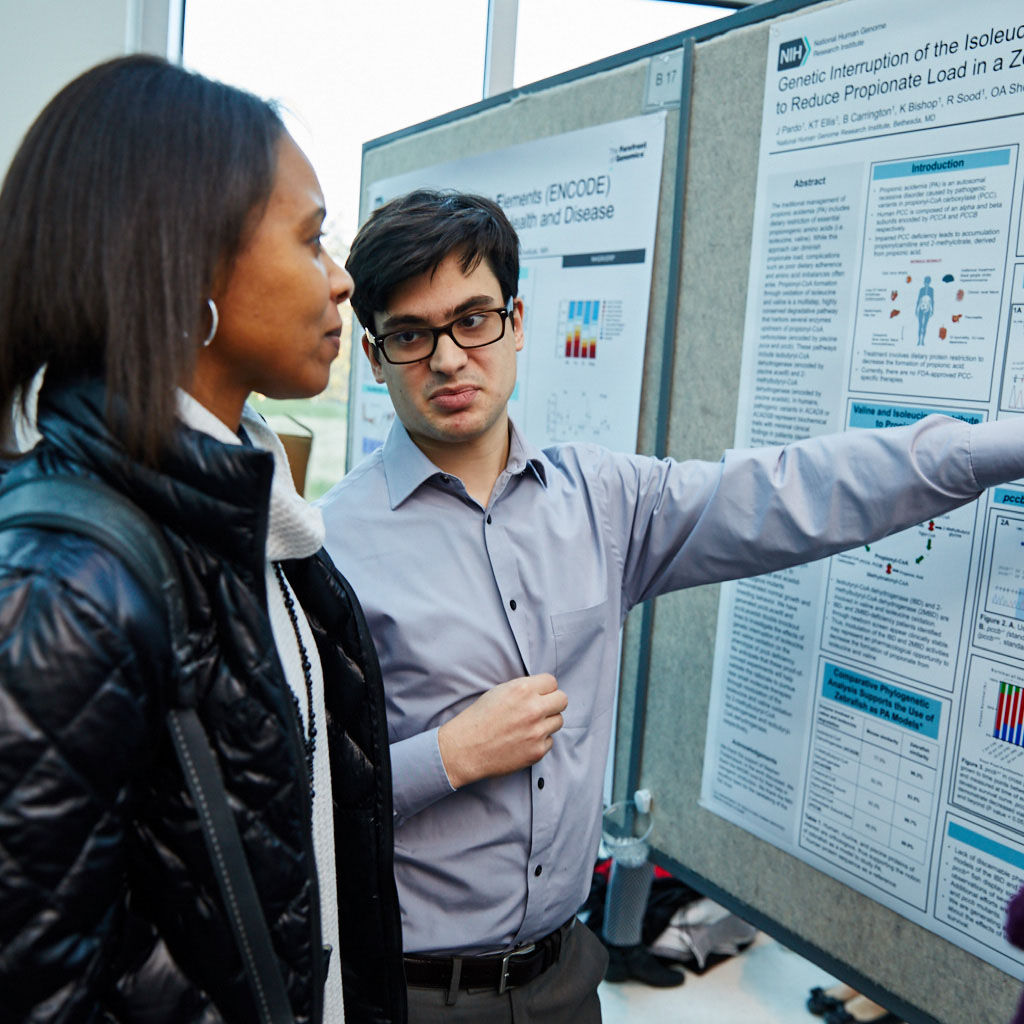
The Division of Intramural Research aims to be world leaders in translating genomic knowledge into tools and approaches that improve the treatment, prognosis, and prevention of rare and common diseases.
Affiliated Centers
- NIH Intramural Sequencing Center (NISC)
- Center for Inherited Disease Research
- Center for Research on Genomics and Global Health
Division Staff

Charles Rotimi, Ph.D.
Scientific Director and NIH Distinguished Investigator, Division of Intramural Research
Director, Center for Research on Genomics and Global Health

Sara Chandros Hull, Ph.D.
Co-Deputy Scientific Director
Office of the Scientific Director

Shawn Burgess, Ph.D.
Co-Deputy Scientific Director
Office of the Scientific Director