 An official website of the United States government




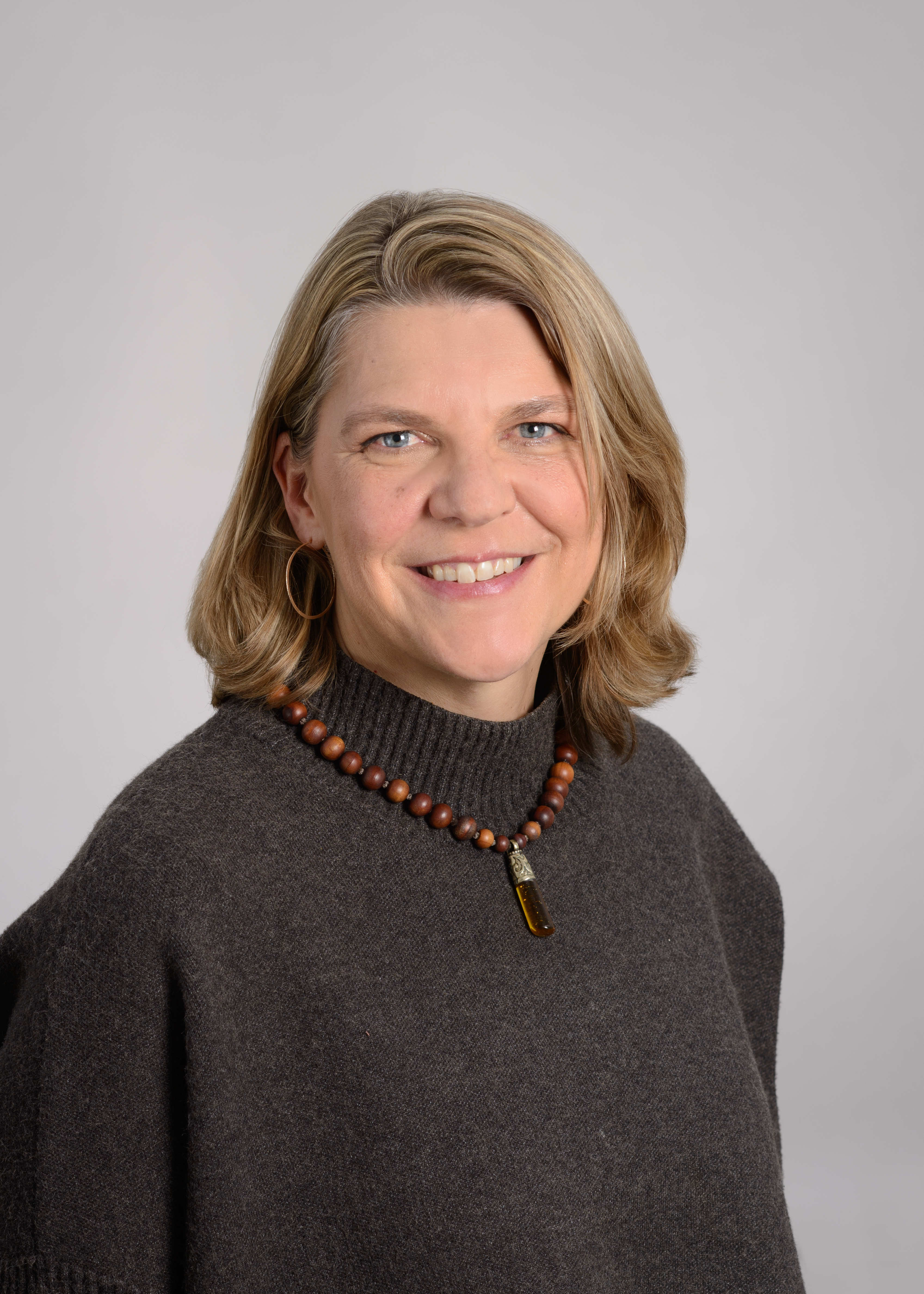
Tamara N. Alliston, Ph.D., is the NIAMS Scientific Director of Intramural Research and leads the NIAMS Intramural Research Program (IRP). Along with planning, coordinating, and directing the scientific research programs of the NIAMS IRP, her key responsibilities include recruiting and retaining world class investigators and charting the future direction of IRP research.
Prior to joining NIAMS, Dr. Alliston was Professor in the Department of Orthopaedic Surgery at the University of California, San Francisco (UCSF). She earned an undergraduate degree in Biology from Trinity University in San Antonio, Texas, and a doctoral degree in Cell Biology from Baylor College of Medicine. She received the Arthritis Foundation Hulda Irene Duggan Arthritis Investigator Award to pursue her post-doctoral research at UCSF.
At NIAMS, Dr. Alliston will lead an independent research program to identify multi-scale mechanisms of skeletal disease in order to advance the development of new therapeutic strategies. This work builds on the accomplishments of her laboratory over the past twenty years investigating the crosstalk of biochemical and physical cues in the skeleton. Most recently, her group uncovered new roles for osteocytes in the control of skeletal fragility and arthritis, including in aging and diabetes. She received the Adele L. Boskey Esteemed Award for Bone and Mineral Research from the American Society for Bone and Mineral Research (ASBMR), recognizing her outstanding scientific contributions, and was elected as a Fellow of the American Institute for Medical and Biological Engineering (AIMBE).
Dr. Alliston brings unique experience in programmatic science leadership within and beyond musculoskeletal research, including as the inaugural Director of the UCSF Musculoskeletal Center and the Director of the NIH P30-supported UCSF Core Center for Musculoskeletal Biology and Medicine (CCMBM), which aims to better understand mechanisms of musculoskeletal disease and to develop novel strategies to improve clinical outcomes by building community among basic and clinical investigators.
Another major theme of her leadership efforts is the development of the next generation of scientists and leaders. Dr. Alliston brings perspective as a former leader and faculty member of several NIH-supported graduate and post-doctoral training programs. She was the inaugural Chair of the Orthopaedic Research Society (ORS) Professional Development Council and serves as a Council member for the American Society for Bone and Mineral Research in her personal capacity. Her achievements have been recognized with the ORS Outstanding Achievement in Mentoring Award and the ORS Women’s Leadership Award.
Research Statement
My research studies the crosstalk between biochemical and physical cues in the skeleton. We identified mechanisms by which growth factors and transcription factors cooperate to direct skeletal cell differentiation and then showed that these pathways also specify key physical properties of the extracellular matrix and bone quality. We apply our expertise in studying TGFβ signaling to investigate the interaction between physical and biochemical signals in the control of skeletal cell function and the role of these pathways in skeletal disease using in vitro, in vivo, and computational models.
Currently, we focus on the role of osteocytes in mechanometabolic coupling, whereby this head-to-toe network of mechanosensory cells balances energy intake and utilization to maintain metabolic and mechanical homeostasis. With a background that spans endocrinology, skeletal mechanobiology, and materials science, our research spans from the molecular to the organismal length scale.
We embrace the creative use and development of new methods with the goal of understanding the role of musculoskeletal tissues in health, aging, and disease.
Scientific Publications
High-fat and high-carbohydrate diets increase bone fragility through TGF-β-dependent control of osteocyte function.
Dole NS, Betancourt-Torres A, Kaya S, Obata Y, Schurman CA, Yoon J, Yee CS, Khanal V, Luna CA, Carroll M, Salinas JJ, Miclau E, Acevedo C, Alliston T
JCI Insight. 2024 Jul 9; 9(16). doi: 10.1172/jci.insight.175103
PMID: 39171528
Aging impairs the osteocytic regulation of collagen integrity and bone quality.
Schurman CA, Kaya S, Dole N, Luna NMM, Castillo N, Potter R, Rose JP, Bons J, King CD, Burton JB, Schilling B, Melov S, Tang S, Schaible E, Alliston T
Bone Res. 2024 Feb 26; 12(1). doi: 10.1038/s41413-023-00303-7
PMID: 38409111
Osteocyte dysfunction promotes osteoarthritis through MMP13-dependent suppression of subchondral bone homeostasis.
Mazur CM, Woo JJ, Yee CS, Fields AJ, Acevedo C, Bailey KN, Kaya S, Fowler TW, Lotz JC, Dang A, Kuo AC, Vail TP, Alliston T
Bone Res. 2019; 7(). doi: 10.1038/s41413-019-0070-y
Osteocyte-Intrinsic TGF-β Signaling Regulates Bone Quality through Perilacunar/Canalicular Remodeling.
Dole NS, Mazur CM, Acevedo C, Lopez JP, Monteiro DA, Fowler TW, Gludovatz B, Walsh F, Regan JN, Messina S, Evans DS, Lang TF, Zhang B, Ritchie RO, Mohammad KS, Alliston T
Cell Rep. 2017 Nov 28; 21(9). doi: 10.1016/j.celrep.2017.10.115
PMID: 29186693
Discrete spatial organization of TGFβ receptors couples receptor multimerization and signaling to cellular tension.
Rys JP, DuFort CC, Monteiro DA, Baird MA, Oses-Prieto JA, Chand S, Burlingame AL, Davidson MW, Alliston TN
Elife. 2015 Dec 10; 4(). doi: 10.7554/eLife.09300
PMID: 26652004