 An official website of the United States government




This graphic illustrates highlights from the presentations and discussion that were part of the roundtable on behavioral health concerns impacting postpartum health during Day 1 of the P2P Workshop: Identifying Risks and Interventions to Optimize Postpartum Health. To learn more about the workshop or view the recordings, visit the main workshop page .
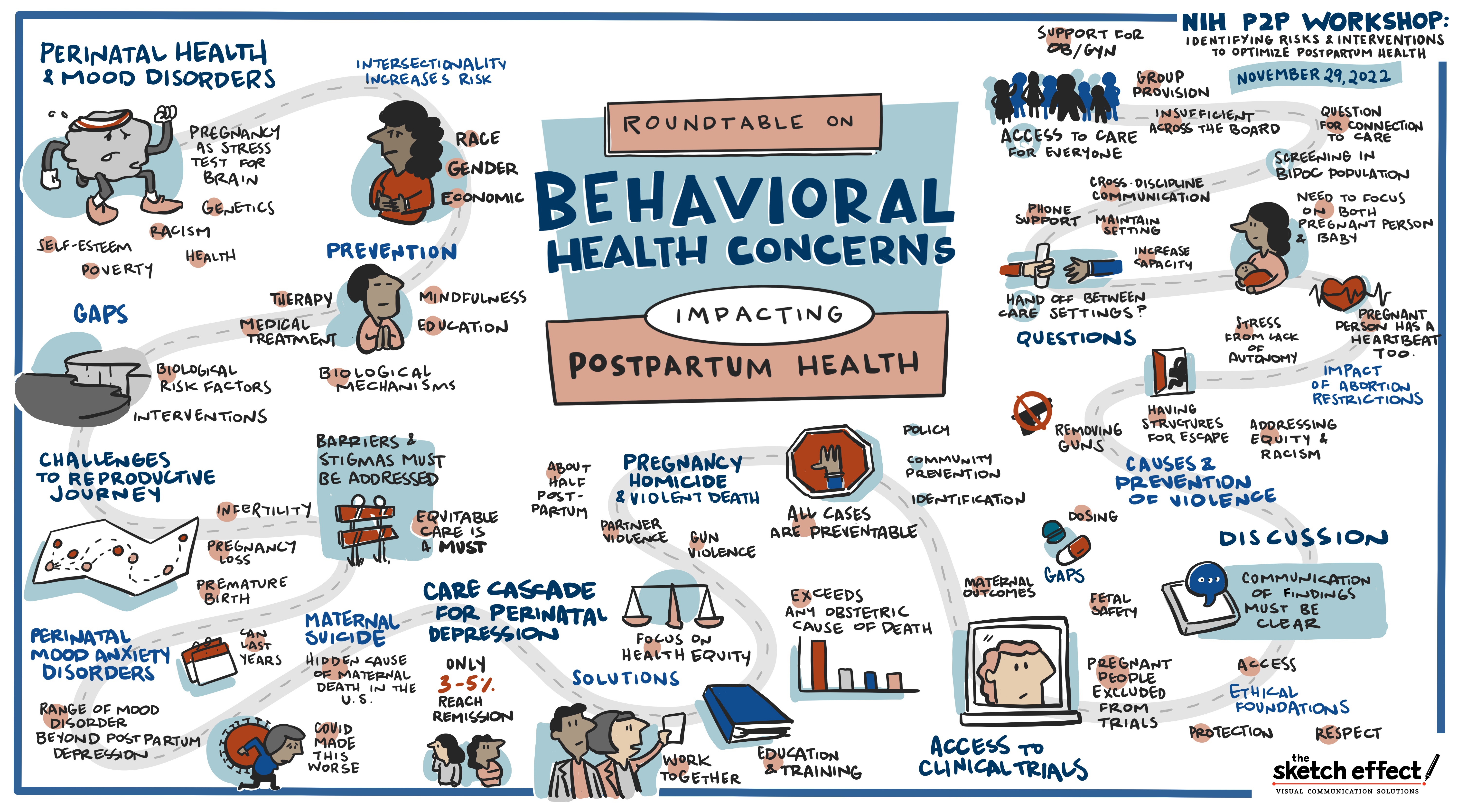
See full text of image.
Perinatal Health and Mood Disorders
Pregnancy as stress test for brain:
- Self-esteem
- Poverty
- Racism
- Health
- Genetics
Intersectionality increases risk:
- Race
- Gender
- Economic
Prevention:
- Therapy
- Mindfulness
- Medical treatment
- Education
- Biological mechanisms
Gaps:
- Biological risk factors
- Interventions
Challenges to Reproductive Journey
Barriers and stigmas must be addressed:
- Infertility
- Pregnancy loss
- Premature birth
- Equitable care is a must
Perinatal mood anxiety disorders:
- Can last years
- Range of mood disorder beyond postpartum depression
Maternal suicide:
- Hidden cause of maternal death in the U.S.
- COVID-19 made this worse
Care Cascade for Perinatal Depression
Only 3-5% reach remission.
Solutions:
- Work together
- Education and training
- Focus on health equity
Pregnancy Homicide and Violent Death
- Exceeds any obstetric cause of death
- Gun violence
- Partner violence
- About half postpartum
All cases are preventable:
- Policy
- Community prevention
- Identification
Access to Clinical Trials
Gaps:
- Maternal outcomes
- Dosing
- Fetal safety
- Pregnant people excluded from trials
Ethical foundations:
- Protection
- Respect
- Access
Communication of findings must be clear.
Discussion
Causes and prevention of violence:
- Removing guns
- Having structures for escape
- Addressing equity and racism
Impact of abortion restrictions:
- Pregnant person has a heartbeat too
- Stress from lack of autonomy
- Need to focus on both pregnant person and baby
Questions
Hand off between care settings?
- Increase capacity
- Phone support
- Maintain setting
- Cross discipline communication
Screening in BIPOC population:
- Question for connection to care
Access to care for everyone:
- Insufficient across the board
- Group provision
- Support for OB/GYN