 An official website of the United States government




Learn more about the three 2026 ODP Early Stage Investigator Lecture awardees who are poised to become future leaders in prevention research.
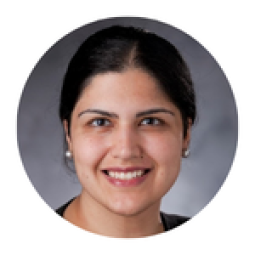
Manisha Bahl, M.D., M.P.H., FSBI
Lecture Title: From Screening to Precision Prevention: AI in Breast Cancer Detection and Care
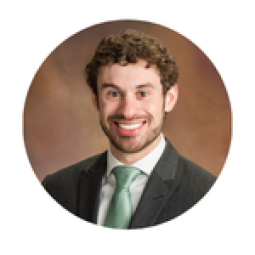
Daniel Corwin, M.D., M.S.C.E.
Lecture Title: Innovating Recovery: Advancing Pediatric Concussion Care with Physiologic Measures & Digital Health

Meichen Wang, Ph.D.
Lecture Title: Edible Clay Sorbents to Reduce Dietary PFAS Exposure and Toxicity
Manisha Bahl, M.D., M.P.H., FSBI
Massachusetts General Hospital
Lecture Title
From Screening to Precision Prevention: AI in Breast Cancer Detection and Care
View the Lecture
May 11, 2026
About the Lecture
Dr. Manisha Bahl will discuss research that advances precision prevention in breast cancer through improved screening, risk stratification, and reduction of unnecessary interventions. Mammography screening has improved early detection and outcomes. However, opportunities remain to further optimize its effectiveness and individualize care. Dr. Bahl’s work addresses this opportunity by integrating advanced imaging and artificial intelligence (AI) to enhance decision-making across the screening and treatment continuum.
She will first discuss clinical studies demonstrating how digital breast tomosynthesis improves the detection of clinically significant cancers while reducing false-positive examinations. AI can further enhance the sensitivity of digital breast tomosynthesis and reduce interval cancers. She will then present AI-based approaches to guide management of high-risk breast lesions and ductal carcinoma in situ, supporting surveillance in appropriately selected patients and reducing unnecessary surgery. Finally, she will highlight emerging AI-driven risk assessment strategies that support more personalized screening approaches.
Together, this work supports a shift from uniform screening and treatment toward individualized, risk-based prevention strategies. The lecture will emphasize how AI can enhance early detection, support clinical decision-making, and enable more precise, patient-centered prevention approaches.
About Manisha Bahl
Manisha Bahl, M.D., M.P.H., FSBI, is a breast imaging radiologist at Massachusetts General Hospital, an Associate Medical Director of Quality for Breast Imaging at Mass General Brigham, Associate Professor of Radiology at Harvard Medical School, and a Fellow of the Society of Breast Imaging. Dr. Bahl’s research focuses on artificial intelligence (AI) and advanced breast imaging technologies. She has received numerous honors for her work, including the American Roentgen Ray Society President’s Award, and was recently inducted as a Distinguished Investigator into the Academy for Radiology & Biomedical Imaging Research. Dr. Bahl serves as an Associate Editor for Radiology and Radiology: Artificial Intelligenceand as an Editorial Board Member for European Radiology. She has delivered more than 150 invited national and international lectures and is widely recognized for her mentorship and teaching.
Daniel Corwin, M.D., M.S.C.E.
Children’s Hospital of Philadelphia
Lecture Title
Innovating Recovery: Advancing Pediatric Concussion Care with Physiologic Measures & Digital Health
View the Lecture
May 12, 2026
May 12, 2026
About the Lecture
Tremendous advances have been made in the care of traumatic brain injuries, specifically concussions, in the pediatric population over the past two decades. As the field of pediatric concussion moves away from a “one-size-fits-all” approach of passive and prolonged rest towards more individualized and active management strategies, it is critical to use the lens of innovation to ensure that all patients have access to the most up-to-date treatment approaches, regardless of who they are, how they are injured, and where they are first seen.
In this talk, Dr. Daniel Corwin will discuss how the Minds Matter Concussion Program at Children’s Hospital of Philadelphia has used a broad array of strategies to try to achieve this goal. This includes developing evaluation techniques that allow frontline clinicians to assess brain function postinjury using advanced physiologic measures and leveraging digital health to assist patients and families in navigating the health care system, while the field continues to innovate around the optimal treatment strategies themselves. Ultimately, the goal is to allow for a precision medicine approach—the right treatment for the right patient at the right time—to be available to all pediatric concussion patients.
About Daniel Corwin
Daniel Corwin, M.D., M.S.C.E., is a pediatric emergency medicine attending physician, Assistant Professor of Pediatrics at the Perelman School of Medicine at the University of Pennsylvania, Director of Clinical and Translational Research for the Division of Emergency Medicine at Children’s Hospital of Philadelphia (CHOP), Associate Director and Emergency Department Lead of the CHOP Minds Matter Concussion Program, and Scholar and Leadership Council member for CHOP’s Center for Injury Research and Prevention. He completed his undergraduate work at the University of Pennsylvania, medical school at the New York University School of Medicine, and his pediatric residency, pediatric emergency medicine fellowship, and pediatric emergency medicine research fellowship at CHOP. His research focuses on: (1) improving mild traumatic brain injury (TBI) diagnosis and risk stratification across care settings, including using objective physiologic and molecular markers of injury to facilitate timely and accurate diagnosis; (2) addressing health outcome differences in TBI care, including exploring innovative care models, such as utilizing digital health and remote patient management to facilitate health care system navigation; and (3) evaluating early therapeutics for mild TBI, including leading the first randomized trial of a nutraceutical to improve mild TBI symptoms in the pediatric population.
Dr. Corwin's work is supported by competitive funding from the National Institutes of Health, Centers for Disease Control and Prevention, Biomedical Advanced Research and Development Authority, Department of Defense, Pennsylvania Department of Health, and Toyota’s Way Forward Fund. He is committed to conducting robust, multidisciplinary research to improve the care of all children with TBI.
Meichen Wang, Ph.D.
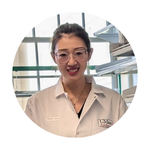
University of Massachusetts Amherst
Lecture Title
Edible Clay Sorbents to Reduce Dietary PFAS Exposure and Toxicity
View the Lecture
May 15, 2026
About the Lecture
Dietary intake represents a major route of human exposure to per- and polyfluoroalkyl substances (PFAS), yet effective interventions to mitigate this exposure are limited, especially during vulnerable periods, such as pregnancy, lactation, and early development. Dr. Meichen Wang’s research focuses on developing edible, clay-based sorbents to sequester PFAS within the gastrointestinal tract, thereby reducing systemic absorption and associated toxicity. Her interdisciplinary team employs a combination of adsorption analyses, in vitro cell models, bioassays, and rodent models to validate the efficacy and safety of the sorbent strategy to protect human health from these persistent contaminants.
About Meichen Wang
Meichen Wang, Ph.D., is an assistant professor at the Department of Environmental Health Sciences at the University of Massachusetts Amherst. She earned her master’s and Ph.D. degrees in toxicology from Texas A&M University and completed postdoctoral training on environmental remediation, funded by the National Institute of Environmental Health Sciences Superfund and K99 programs. Her current research focuses on developing edible clay-based sorbents that mitigate dietary exposure to per- and polyfluoroalkyl substances (PFAS) and prevent their toxicities during critical windows, such as pregnancy, lactation, and early development. Her work has resulted in 50 peer-reviewed publications, a patent for clay technologies, and a license for technology transfer. Her work aims to bridge fundamental toxicology and practical interventions to establish clay sorbents as a primary dietary barrier that reduces internal chemical burden and prevents chronic diseases.