 An official website of the United States government




In 2022, the NIBIB communications team covered a wide variety of studies and programs supported by the Institute, from basic research findings to advances in imaging and wearables to COVID-19 updates. Many significant advances were made. We present here a sample of some of the most-read articles written this year. We look forward to sharing more exciting science news in 2023.
None
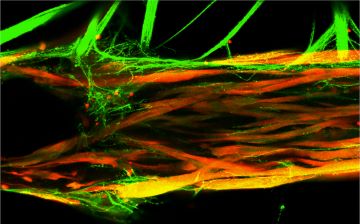
NIBIB-funded researchers have found a way to model the human neuromuscular junction by growing these synapses in a lab, which could accelerate novel treatments for neuromuscular diseases.
Neuromuscular junction, how's that function?
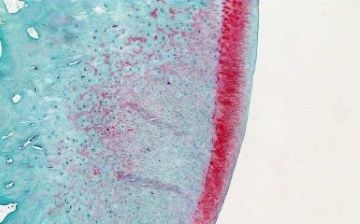
NIBIB-funded researchers are developing an implantable, biodegradable film that helps regenerate damaged cartilage. Their study, performed in rabbits, could be an initial step in the establishment of a new treatment.
Recharging cartilage after knee damage via biodegradable film
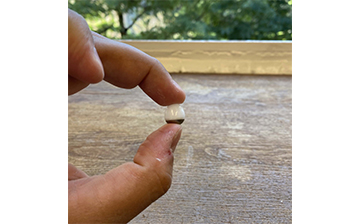
NIBIB-funded researchers are developing a robotic pill that, after swallowing, can deliver biologic drugs into the stomach, which could provide an alternative method for self-injection.
Robotic pill can orally deliver large doses of biologic drugs Top Program Updates
The National Institutes of Health announced the winners of its NIH Technology Accelerator Challenge (NTAC) for Maternal Health, a prize competition for developers of diagnostic technologies to help improve maternal morbidity and mortality around the world. The winning technologies share a total of $1 million in prizes.
Prize winners of maternal health diagnostics challenge
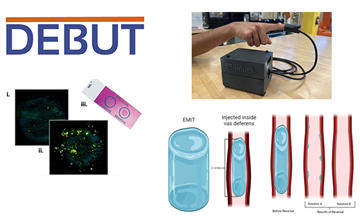
The National Institutes of Health announced the winners of the 11th annual Design by Biomedical Undergraduate Teams (DEBUT) Challenge with prizes totaling $130,000. NIH and VentureWell named nine winning teams and five honorable mentions that designed technology solutions to unmet health care needs.
NIH announces winners of 2022 DEBUT challenge
The National Institutes of Health has awarded research funding for seven pilot projects developing early stage, groundbreaking neurotechnologies. The innovative projects would enable new medical devices to diagnose and treat both acute and chronic disorders, from neuropathic pain to mental illness.
Program to develop devices for nervous system disorders Top COVID-19 Updates
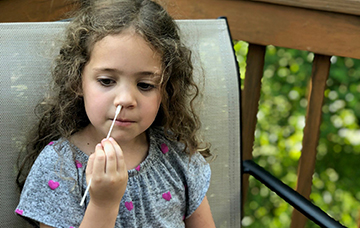
A new study that could have immediate implications for COVID-19 testing in schools found that with age-appropriate instructions, school-aged children can successfully use a nasal swab to obtain their own COVID-19 test specimen.
NIH-funded pediatric COVID-19 testing study finds school-aged children can self swab
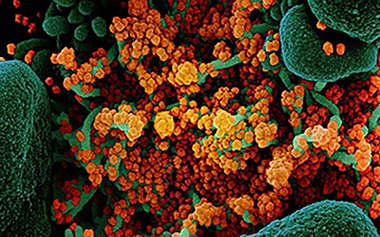
The National Institutes of Health’s Rapid Acceleration of Diagnostics (RADx®) Tech program is working to identify necessary elements of at-home COVID-19 diagnostic test kits that may be used independently by people with disabilities.
RADx Tech to tackle development of more accessible at-home COVID-19 tests
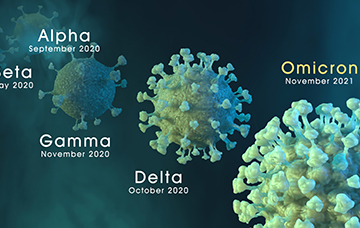
Researchers funded by NIH's RADx Tech program have developed a fast, cost-effective method to detect the circulation of known SARS-CoV-2 variants. This customizable genotyping approach could augment current surveillance.
NIH-funded project offers efficient approach when tracking variants Top Sensors and Wearables
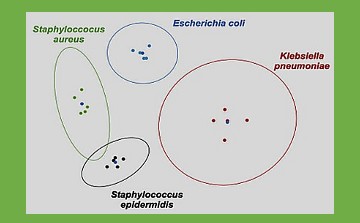
Bacterial infections are the leading cause of disease and death worldwide, an ongoing public health problem that is exacerbated by slow or inaccurate diagnostics. Now NIBIB-funded scientists have engineered an inexpensive, paper-based test that can rapidly identify multiple types of bacteria.
Paper-based test identifies multiple types of bad bacteria
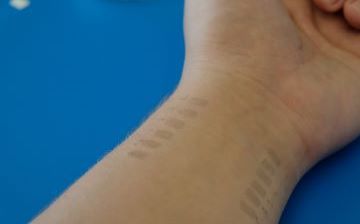
NIBIB-funded researchers are fine-tuning a wearable, cuffless blood pressure monitor. Made of graphene, one of the thinnest materials in the world, the device is worn on the underside of the wrist and can measure blood pressure with comparable accuracy to a standard blood pressure cuff.
Temporary "tattoos" that measure blood pressure
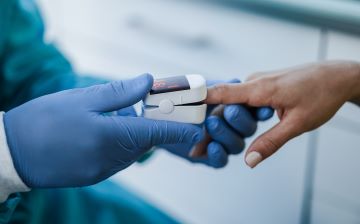
A single-center study found that minority patient groups received less supplemental oxygen in the intensive care unit (ICU) due to inaccurate readings from pulse oximeters. Treatment decisions based on inaccurate readings from these devices may perpetuate racial disparities in care.
Pulse oximeter performance among minority patients Top Treatments and Surgical Interventions
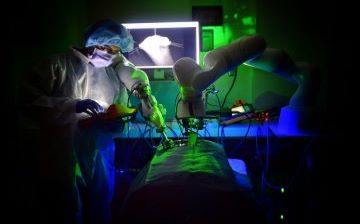
NIBIB-funded researchers are developing an autonomous robot that can perform bowel surgery with minimal assistance from a surgeon. The robot, called STAR (for Smart Tissue Autonomous Robot), outperformed expert surgeons when compared head-to-head in preclinical models.
Robot performs surgery with minimal human help
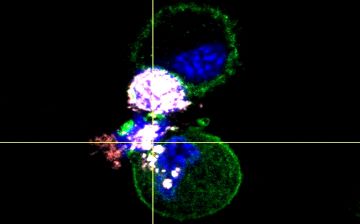
NIBIB-funded researchers are developing a method to activate natural killer cells using an external magnetic field, which not only enhances their cytotoxicity, but allows them to be tracked using magnetic resonance imaging (MRI) to verify that they’ve reached their target.
Magnetized killers for the treatment of solid tumors
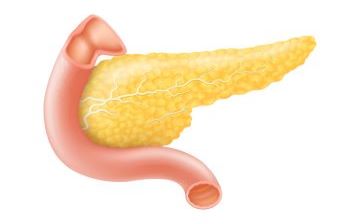
NIBIB-funded researchers combined an injectable radioactive gel with systemic chemotherapy in multiple mouse models of pancreatic cancer. The treatment resulted in tumor regression in all evaluated models, an unprecedented result for this genetically diverse and aggressive disease.
Radioactive gel plus chemo shrinks pancreatic tumors Top Medical Imaging
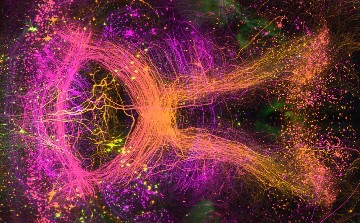
A research team developed a microscope that combines rapid high- and low-power light-sheet microscopy with an open top design that allows for rapid imaging of a wide range of sample types.
Hybrid microscope streamlines imaging

Researchers have found that AI models could accurately predict self-reported race in several types of medical images, suggesting that race information could be unknowingly incorporated into image analysis models.
AI can determine race from medical images
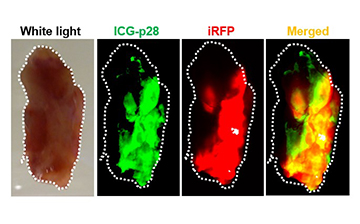
Researchers are developing an imaging method that would allow surgeons to better identify cancerous cells in breast tumor margins during surgery which could potentially reduce follow-up surgeries and cancer recurrence.
Lighting up breast tumors during surgery