 An official website of the United States government




Audience
Researchers and clinicians at all career stages who are interested in the emerging research area of precision nutrition, and how such approaches can be studied and applied to improve health outcomes in older adults.
Dates
May 7, 2024 | 9:00 a.m. to 4:30 p.m. ET
May 8, 2024 | 9:00 a.m. to 1:30 p.m. ET
Purpose and Background
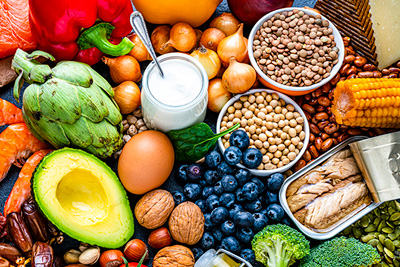
Precision nutrition, an emerging research area, recognizes that individual responses to dietary interventions and nutritional exposure are influenced by their variabilities in metabolic flexibility, gene-nutrient interactions, epigenetic regulation, microbiome, as well as social and environmental factors. Much of the nascent precision nutrition research has focused on correlative relationships between individual responses to diet and their physiological characteristics in the disease conditions including obesity, cardiovascular diseases, type 2 diabetes, and Alzheimer’s disease, where strategies into improving healthy aging in the context of precision nutrition have not been carefully considered where mechanistic studies are currently lacking.
NIA hosted this virtual workshop to gather experts in various fields related to Precision Nutrition to discuss the current state-of-the-science and identify gaps, challenges, and opportunities to understand the biological mechanisms and different designs, methods, and technologies, and to foster transdisciplinary communication and collaboration, with the goal to translate Precision Nutrition to promote healthy aging and improve health outcomes in older adults.
Recording
To request a recording from this meeting, please contact the meeting organizer .
Agenda
All times are in Eastern Daylight Time.
Tuesday, May 7
9:00 a.m. Opening Remarks, Stacy Carrington-Lawrence, Ph.D., Acting Division Director, Division of Aging Biology, NIA
9:05 a.m. Workshop Welcome and Overview, José M. Ordovás, Ph.D., Tufts University
Session I | Nutrigenetics, Nutri-omics, and Dietary Interventions for Healthy Aging
Chair: Cara Green, Ph.D., University of Wisconsin-Madison
9:20 a.m. The Protein Paradox in Health and Aging, Alistair Senior, Ph.D., The University of Sydney
9:45 a.m. Dietary Patterns and Epigenetic Aging, Lindsay M. Reynolds, Ph.D., Wake Forest University
10:10 a.m. Time Restricted Eating for Healthy Aging: Facts or Fiction?, Blandine Laferrère, M.D., Ph.D., Columbia University
10:35 a.m. Heterogeneity in the Impact of Dietary Protein on Metabolic Health Highlights the Importance of Precision Dietetics, Cara Green, Ph.D., University of Wisconsin-Madison
11:00 a.m. Ketone Bodies as Signaling Metabolites in Aging, John Newman, M.D., Ph.D., Buck Institute for Research on Aging
11:25 a.m. Session Discussion
11:45 a.m. Lunch Break
Session II | Environmental, Social, and Translational Approaches in Precision Nutrition
Chair: Andrew W. McHill, Ph.D., Oregon Health and Science University
12:15 p.m. It’s Not the Time of the Clock, It’s the Time of Your Clock: Impact of Sleep and Circadian Timing on Cardiometabolic Health, Andrew W. McHill, Ph.D., Oregon Health and Science University
12:40 p.m. Mediterranean Diet Promotes Stress Resilience, Protects Against Inflammation, and Slows Aging in a Multi-System, Randomized, Long Term Nonhuman Primate Trial, Carol A. Shively, Ph.D., Wake Forest University
1:05 p.m. Social Determinants of Good Nutrition: Understanding Food Insecurity among Older Adults, Kali Thomas, Ph.D., Johns Hopkins University
1:30 p.m. Designing Microbiome-Targeted Interventions that Promote Healthy Aging, Sean Gibbons, Ph.D., Institute for Systems Biology
1:55 p.m. Session Discussion
2:15 p.m. Break
2:30 p.m. Session III | Special Topics in Precision Nutrition for Aging
Chair: Matthew J. Rossman, Ph.D., University of Colorado Boulder
2:30 p.m. Treating Obesity in Older Adults: The Importance of Maintaining Muscle Health, John A. Batsis, M.D., University of North Carolina
2:55 p.m. Dietary Supplementation-Based Interventions Targeting Biological Mechanisms of Vascular Aging for Improving Endothelial Function, Matthew J. Rossman, Ph.D., University of Colorado Boulder
3:20 p.m. Developing Research-Informed Policies for Healthy Aging, Amanda Lehning, Ph.D., University of Maryland, Baltimore
3:45 p.m. Bridging Nutritional Science and Aging: A Precision Approach to Optimal Senescence, José M. Ordovás, Ph.D., Tufts University
4:10 p.m. Session Discussion
4:30 p.m. Day 1 Adjourn
Wednesday, May 8
Session IV | Integrative Approaches in Precision Nutrition and Technology
Chair: Christopher B. Newgard, Ph.D., Duke University
9:00 a.m. Diet, Gut Microbiome, and Cardiometabolic Health: A Meta-Omics Perspective, Mireia Vallès Colomer, Ph.D., Universitat Pompeu Fabra, Barcelona, Spain
9:25 a.m. The Role for Sensors and Machine Learning Techniques in Nutrition: Too Much or More Precision?, Guido Camps, Ph.D., Wageningen University and Research, The Netherlands
9:50 a.m. A Multi-Parametric Approach for the Discovery of Pan-Geroprotective Molecules, Federico Pietrocola, Ph.D., Karolinska Institutet, Stockholm, Sweden
10:15 a.m. Integrative Approaches Reveal Sexual Dimorphism in Regulation of BCAA Metabolism that Impact Cardiometabolic Disease Risk, Christopher B. Newgard, Ph.D., Duke University
10:40 a.m. Session Discussion
11:00 a.m. Break
Session V | Precision Nutrition for Older Adults: Design, Methods, Gaps and Opportunities
Chair: Regan Bailey, Ph.D., Texas A&M University
11:10 a.m. Nutrition for Precision Health: Potential Implications for Older Adults, Holly Nicastro, Ph.D., DPCPSI, NIH
11:35 a.m. Dietary Assessment with Older Adults: Challenges and Opportunities, Regan Bailey, Ph.D., Texas A&M University
12:00 p.m. Nutrition Geroscience Interventions: Opportunities and Challenges, Sai Krupa Das, Ph.D., Tufts University
12:25 p.m. Nutritional Epidemiologic Approaches to Studying Diverse Dietary Patterns and Healthy Aging and Longevity, Frank B. Hu, M.D., Ph.D., Harvard University
12:50 p.m. Session Discussion
1:10 p.m. Concluding Remarks by Workshop Chair and All Panel Members
1:30 p.m. Day 2 Adjourn
Contact Information
Please contact Yih-Woei Fridell at yih-woei.fridell@nih.gov or Yi-Ping Fu at yi-ping.fu@nih.gov for questions you have about the workshop.