 An official website of the United States government




ODS Digest: News & Insights - January 7, 2026
|
Image
| |||||||||||
| January 7, 2026 | |||||||||||
|
Image

ODS Events | |||||||||||
ODS 2025–2026 Seminar Series TheODS 2025–2026 Seminar Seriespresents virtual seminars on dietary supplement research and related topics. Intended for those interested in dietary supplement research, the seminars are open to everyone. Wednesday, January 21, 2026, 11 a.m. ET — Nutrigenomics James Fleet, Ph.D.—University of Texas at Austin Floyd Chilton, Ph.D.—University of Arizona Register Image

and view the Seminar Seriesflyer Image
to learn more. | |||||||||||
|
Image

ODS Staff News | |||||||||||
|
Image
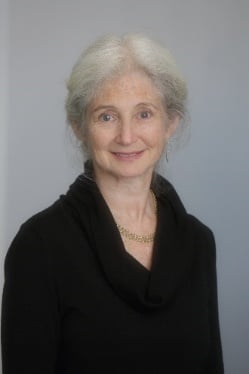
Barbara C. Sorkin, Ph.D., retired from federal service on December 31, 2025. Since joining ODS in 2011, Dr. Sorkin has served as the Co-Director of the Botanical Research Centers Program, which promotes collaborative, transdisciplinary research on the safety, effectiveness, and mechanisms of action of botanical dietary supplements. For more than a decade, Dr. Sorkin also led the ODS Seminar Series, a monthly webinar program featuring presentations by distinguished national and international experts in dietary supplements and nutrition. Prior to joining ODS, Dr. Sorkin was responsible for administering extramural research in the areas of healthy aging, cancer, and sleep at the NIH National Center for Complementary and Integrative Health, where she worked since 2003. Before that, Dr. Sorkin was on the faculty at the Scripps Research Institute in La Jolla, California, and at the Forsyth Institute in Boston, Massachusetts, where she was a successful NIH grant applicant. Dr. Sorkin has authored numerous research reviews and original research papers in many areas ranging from cell adhesion molecule structure to the health effects of dietary supplements. She received her B.S. and M.S. from Yale University and her Ph.D. in developmental molecular biology from The Rockefeller University. “I would like to thank Barbara for her countless contributions to ODS and NIH, and to the field of botanical dietary supplement research,” said Dr. Andrew Bremer, Acting Director of ODS. “Her integrity, leadership, and commitment to botanical and nutrition research, and her generous, collaborative spirit have made an enduring impact on the field—and on all of us who have been privileged enough to work with her. With appreciation and gratitude, I wish her the very best in retirement.” | |||||||||||
|
Image

Recently Published ODS Research | |||||||||||
Pandey D, Andrews K, Gusev PA, Vavilala S, Oh LY, Bailen R, Sun J, Wang X, Pehrsson P, Kuszak A, Dwyer J.5-methyltetrahydrofolate (5-MTHF) in Dietary Supplements (DS): Isomer Composition and Dosage Form Performance at the Initial Shelf-life Image
. Curr Dev Nutr. 2025 Volume 9, 107393. | |||||||||||
|
Image

Co-Funding Opportunities | |||||||||||
| ODS provides co-funding support to the NIH Institutes, Centers, and Offices (ICOs). Co-funding allows ODS to promote dietary supplement-related science by supporting NIH extramural dietary supplement-related research project grants, training and career development grants, and scientific conferences with primary ICOs. See the list ofactive ODS co-funding opportunities. | |||||||||||
|
Image

Science Shorts | |||||||||||
Colorectal cancer is one of the most common cancers in the United States, yet many cases may be preventable through diet and lifestyle choices. While growing evidence points to calcium as a potential protective nutrient, much of the existing research has centered on calcium from dairy foods, leaving the role of nondairy calcium sources––including dietary supplements––less well understood. AJAMA Network Openpublication Image
by Semi Zouiouich, Ph.D., M.P.H.; Erikka Loftfield, Ph.D., M.P.H.; and colleagues from the NIH National Cancer Institute explored the association between calcium intake and risk of colorectal cancer. Drawing on data from the extensive NIH–AARP Diet and Health Study, the investigators evaluated dietary and supplemental calcium intake among 471,396 healthy U.S. adults aged 50 to 71. They also examined whether associations between calcium intake and colorectal cancer risk differed by calcium source, tumor site, or population subgroup. The analysis showed thatover a median follow-up of 18.4 years, people with the highest calcium intake had a 29% lower risk of colorectal cancer than those with the lowest intake.This inverse association held across different sources of calcium (dairy foods, other foods, or supplements), tumor sites in the colon and rectum, and population subgroups. The findings from this analysis indicate that increasing calcium intake—particularly in populations with lower consumption—could be a practical step toward reducing colorectal cancer risk. | |||||||||||
|
Image

Featured Fact Sheets | |||||||||||
| The ODSmagnesium andzinc fact sheets for health professionals now feature concise summary sections that provide quick overviews of key points. Click on the expandable summaries to access all the details and references to the peer-reviewed literature. Looking for general information? ODS also offersmagnesium andzinc fact sheets for consumers, in both English and Spanish. | |||||||||||
|
Image

Image
on Facebook |
Image

|
Image
@NIH |
Image

|
Image
on LinkedIn | |||||||
| About ODS TheOffice of Dietary Supplements (ODS)is part of the National Institutes of Health (NIH), the nation’s medical research agency—supporting scientific studies that turn discovery into health. | Contact Us Office of Dietary Supplements National Institutes of Health 6705 Rockledge Drive (Rockledge I) Room 730, MSC 7991 Bethesda, MD 20817 [email protected] https://ods.od.nih.gov | ||||||||||