 An official website of the United States government




Alzheimer’s disease insights
Researchers identified a distinct subtype of astrocytes (shown in magenta) that may protect nerve cells against cell death. These protective cells become less abundant in mouse models of Alzheimer’s disease, but exercise appears to strengthen them. 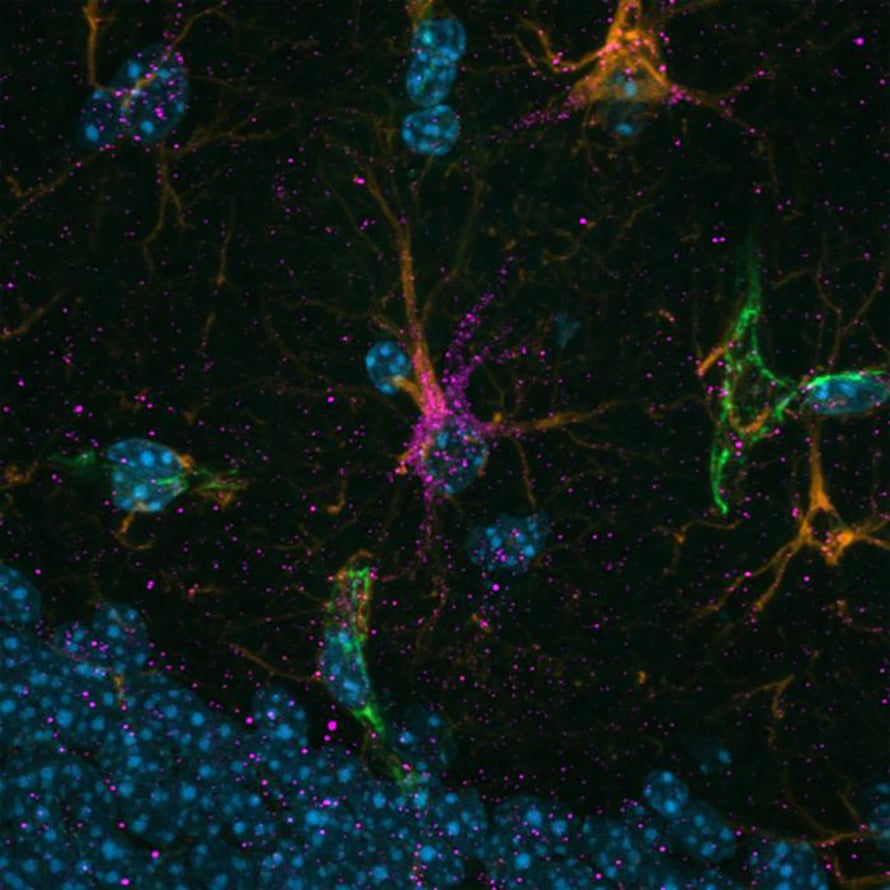
Previous research suggested that the balance of metals in the brain may play a role in the development of Alzheimer’s disease. But the nature of this role has been unclear. NIH-funded researchers found evidence that lithium deficiency could be a cause of Alzheimer’s disease . Other scientists uncovered a new biomarker that may help more accurately predict cognitive decline in people with Alzheimer’s . Yet another biomarker for the early detection, prognosis, and monitoring of Alzheimer’s could be measured noninvasively with diffusion MRI . And work in a mouse model yielded insights into how exercise alters brain cells to protect them against Alzheimer’s disease .
Engineering immune cells within the body
Illustration of a CAR T cell, left, attacking a cancerous B cell, right. The researchers devised a way to create CAR T cells within the body that target and destroy T cells.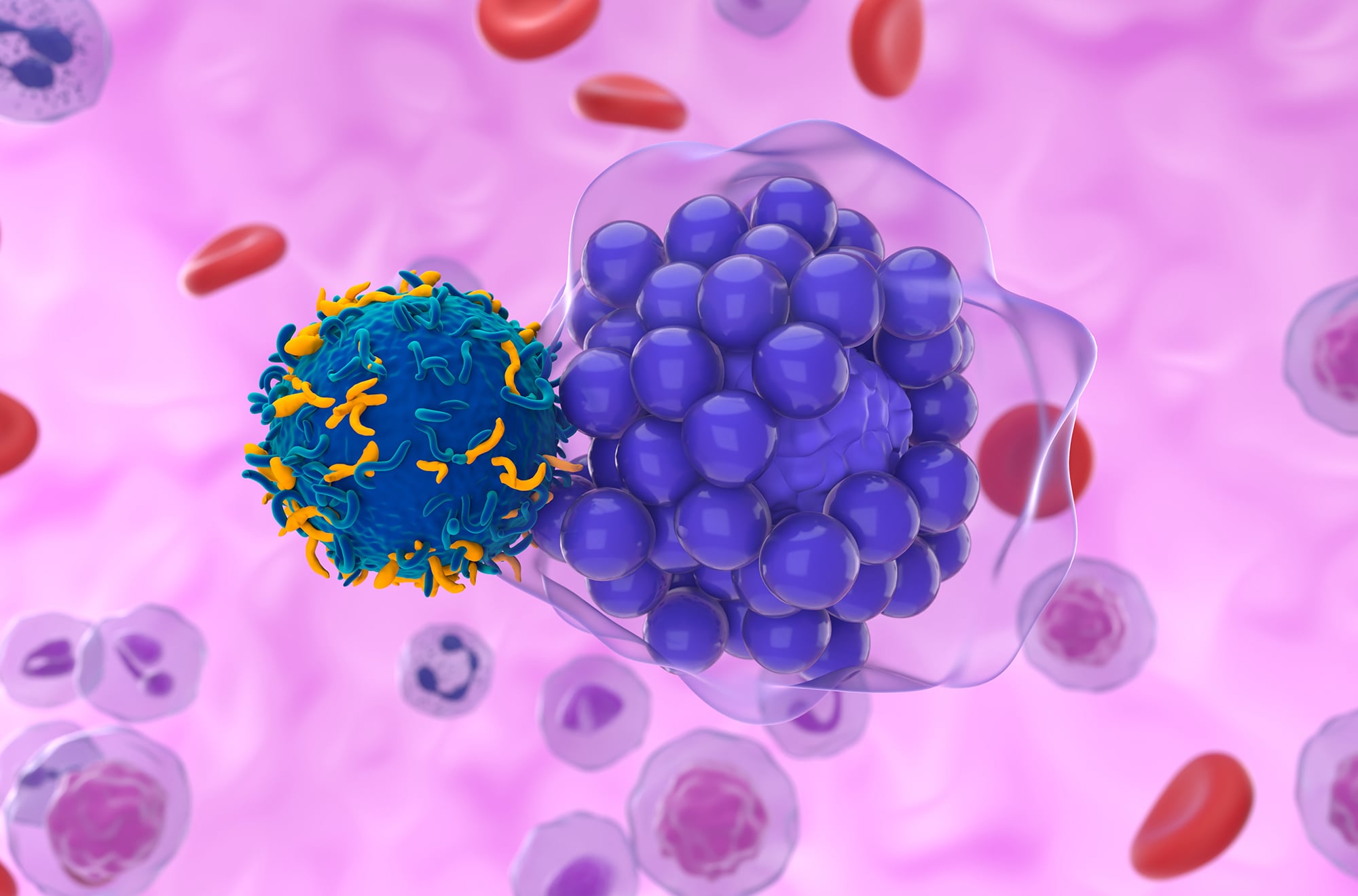
CAR T cell therapies use a patient’s own T cells—the body’s primary killer of infected and other diseased cells—to attack cancer cells. But making CAR T cells is complex and costly, and can’t currently be done on a large scale. Researchers developed a way to engineer T cells within a living organism. The approach could make these therapies more accessible for treating cancer and autoimmune diseases.
Engineering immune cells within the body Overactive immune responses in ME/CFS
By analyzing blood samples from dozens of people who have ME/CFS, researchers identified molecular pathways and other factors that shed new light on this poorly understood condition.
Myalgic encephalomyelitis/chronic fatigue syndrome, or ME/CFS, involves unexplained fatigue that may worsen after exertion and cause problems with thinking and memory that last at least six months. Affected people often report symptoms consistent with infection before ME/CFS developed. Yet no single microbe has been found responsible. Researchers uncovered signs of overactive immune responses in people with ME/CFS. This suggests it may be caused by a general immune response to infection.
Overactive immune responses in ME/CFS Non-opioid compound for chronic pain relief
The researchers developed a compound (in cyan) that nestles within cannabinoid receptor type 1 (in green and purple) to relieve pain in mice without affecting the brain. 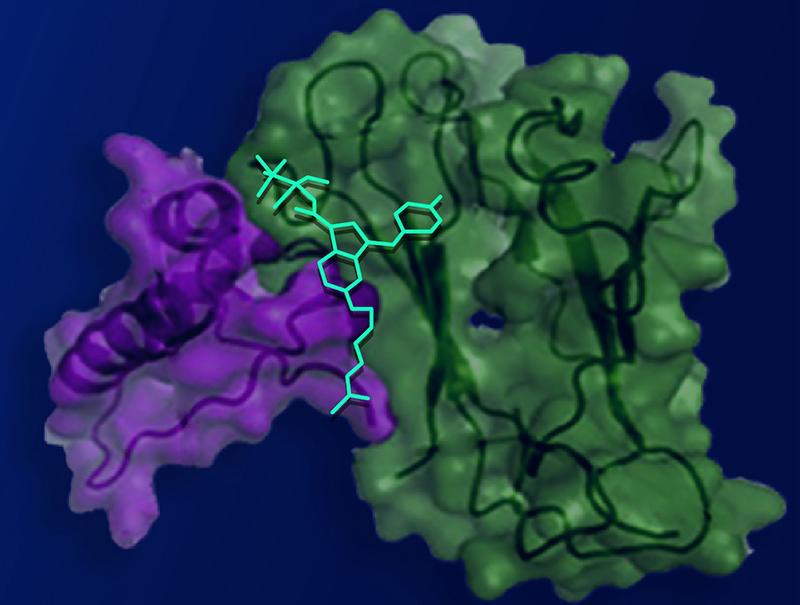
Chronic pain affects nearly 25% of adults in the U.S. Opioids can be very effective for treating chronic pain, but have potential for abuse and are lethal when overdosed. Scientists developed a compound that relieved pain in mice without adverse side effects. The finding could lead to more effective alternatives to opioids for chronic pain treatment.
Non-opioid compound for chronic pain relief Urban design affects walking levels
By analyzing data from thousands of smartphones, researchers found that moving to more walkable cities is linked to increased physical activity.
Many Americans don’t get the recommended amounts of physical activity. Lack of physical activity increases the risk of many serious conditions, like heart disease, diabetes, and cancer. A large study using smartphone data found that moving to different communities can affect how much you walk. The results suggest that the design of a community can play a role in levels of physical activity.