 An official website of the United States government




Progress in brain-computer interfaces

Brain injury from conditions like stroke can cause paralysis, including loss of the ability to speak. Scientists developed a brain-computer interface that can quickly translate brain activity into audible words . Other researchers designed a brain-computer interface to decode inner speech in real time from activity in the brain’s motor cortex. In another advance, tiny electrodes placed precisely in the brain let people with spinal cord injuries feel sensations of shape, motion, and the orientation of objects on the skin . Coupled with further advances in bionic limbs, this technology might lead to an artificial sense of touch.
Treatments for rare diseases in children
Drs. Kiran Musunuru (left) and Rebecca Ahrens-Nicklas with the infant patient who received personalized gene therapy for a rare and life-threatening genetic disorder. 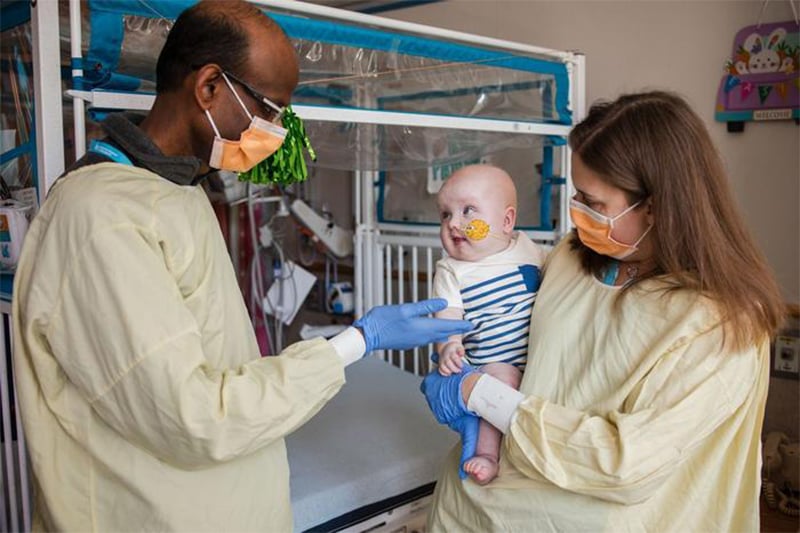
Researchers used a personalized gene-editing approach to mend a faulty gene in a baby born with a rare, often deadly disorder. This type of gene-editing method could be used to create personalized therapies for treating additional genetic disorders. Other scientists used an experimental small molecule to alleviate CoQ10 deficiency and reverse associated brain damage in a boy with a rare disease caused by particular genetic mutations. Understanding the molecular causes of rare diseases can lead to effective cures and treatments.
Benefits of treating opioid use disorder in county jails
The study showed that treatment for opioid use disorders in jails reduced deaths from overdose and non-fatal overdoses after release.
The opioid epidemic in the U.S. led to more than 80,000 deaths in 2023 alone. People who use opioids are more likely to be incarcerated than the general population. Providing medications for opioid use disorder in jails led to lower rates of overdose, death, and reincarceration after release. The findings suggest that treating opioid use disorder in jails could save lives.
Benefits of treating opioid use disorder in county jails Cervical cancer advances
At-home screening for cervical cancer might help to reduce some of the obstacles that keep women from getting tested. 
Cervical cancer is one of the most common cancers among women worldwide. About 4 of every 5 cases are caused by the human papillomavirus (HPV). HPV vaccination, which involves two doses, can prevent most cervical cancers, but global uptake has been low. Researchers found that only one dose provided protection as good as the current standard of two . In another finding, scientists found that women who used at-home screening kits for cervical cancer were more than twice as likely to complete screening than women who received only telephone reminders.
Difference in kidney function tests predicts health risks
Two common blood tests can be used to estimate kidney filtration rates.
Kidneys protect our health by filtering toxins, electrolytes, and excess water out of our blood. Unfortunately, more than 35 million people nationwide have chronic kidney disease. Researchers found that people with chronic kidney disease faced a higher risk of death and serious health problems when two tests of kidney function didn’t agree with each other. The findings suggest that using both tests could help identify people at increased risk for health problems.