 An official website of the United States government




Insight into mechanisms of ME/CFS

Myalgic encephalomyelitis/chronic fatigue syndrome (ME/CFS) is a poorly understood condition that leads to debilitating fatigue, intolerance to exercise, and cognitive problems. It often develops after an infection. Researchers compared people with and without post-infectious ME/CFS and found important differences in their brains and other body systems. The findings point to potential mechanisms for ME/CFS as well as therapeutic targets.
Insight into mechanisms of ME/CFS Skin test detects evidence of Parkinson’s and related disorders

Parkinson’s disease is the most common of a set of neurodegenerative conditions known as synucleinopathies. It has been difficult to detect these conditions and measure their severity. Scientists showed that a simple skin biopsy could identify people who had synucleinopathies with a high degree of accuracy. The findings could lead to earlier and more accurate diagnoses of these conditions.
Skin test detects evidence of Parkinson’s and related disorders Developing treatments for prion diseases

No treatments are available for the devastating brain disorders known as prion diseases. These arise when normal prion proteins misfold and form toxic clumps that destroy brain cells. Prion proteins aren’t essential for survival, so scientists developed a way to safely turn off the prion-producing gene in mice. It reduced prion protein levels by up to 80%. The finding suggests an approach for treating prion diseases in people.
Developing treatments for prion diseases Potential target for cataract drug development

Cataracts are a common cause of vision loss in older adults. The only available treatment is removing and replacing the clouded lens. By studying ground squirrels that temporarily develop cataracts during hibernation, scientists found a protein that allows their eyes to rapidly clear cataracts after hibernation. Rats and fish given this protein also cleared cataracts, suggesting a potential drug treatment strategy for people.
Potential target for cataract drug development Genome editing restores hearing in mice
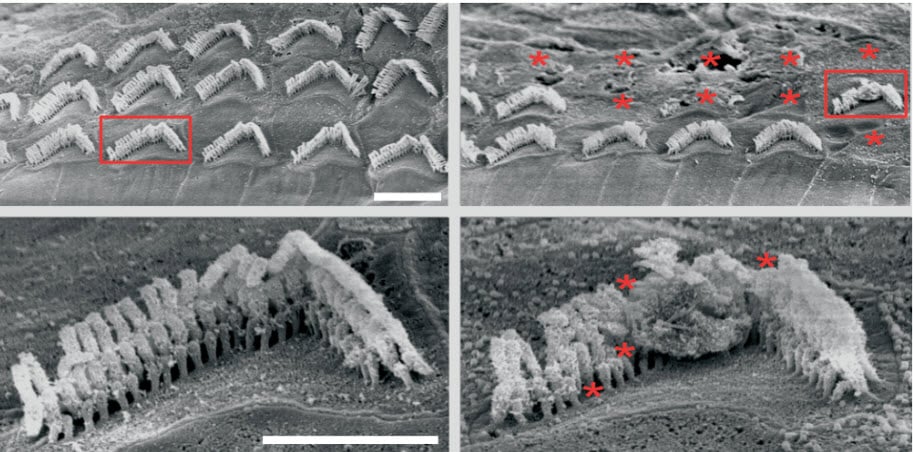
For over half of children born with hearing loss, a single genetic abnormality is to blame. This is called inherited deafness, or genetic deafness. Scientists developed a genome editing method that restored hearing in adult mice with a rare type of genetic hearing loss. With additional study, this type of approach might help to reverse some types of inherited hearing loss in people.