 An official website of the United States government




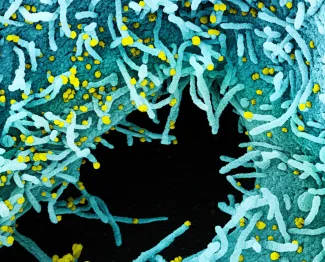
Colorized scanning electron micrograph of a cell heavily infected with SARS-CoV-2 virus particles (yellow), isolated from a patient sample. The black area in the image is extracellular space between the cells.
What
The National Cancer Institute (NCI) has launched the Serological Sciences Network for COVID-19 (SeroNet) , an initiative aimed at quickly increasing the nation’s antibody testing capacity and engaging the U.S. research community to understand the immune response to COVID-19. NCI is part of the National Institutes of Health.
SeroNet will engage more than 25 of the nation’s top academic, government and private sector biomedical research institutions to study the immune response to COVID-19 to speed delivery of testing, treatments and vaccine development for combat the pandemic.
As part of the Paycheck Protection Program and Health Care Enhancement Act, Congress authorized $306 million for NCI to develop, validate, improve, and implement serological testing and associated technologies. SeroNet is the largest of NCI’s serological science initiatives funded by the COVID-19 emergency appropriation, accounting for more than half of the allocation.
Who
Available for interviews:
- Douglas R. Lowy, M.D., NCI Principal Deputy Director, NCI
- Dinah S. Singer, Ph.D., Deputy Director, Scientific Strategy and Development, NCI
About the National Cancer Institute (NCI): NCI leads the National Cancer Program and NIH’s efforts to dramatically reduce the prevalence of cancer and improve the lives of cancer patients and their families, through research into prevention and cancer biology, the development of new interventions, and the training and mentoring of new researchers. For more information about cancer, please visit the NCI website at cancer.gov or call NCI’s contact center, the Cancer Information Service, at 1-800-4-CANCER (1-800-422-6237).