 An official website of the United States government




What
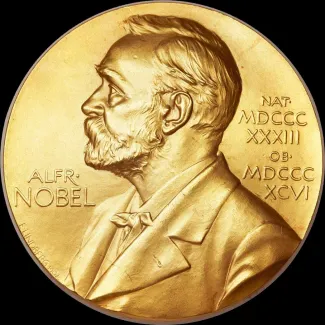
The 2019 Nobel Prize in Economic Sciences has been awarded to National Institutes of Health grantees Esther Duflo, Ph.D., of the Massachusetts Institute of Technology, Cambridge, and Michael Kremer, Ph.D., of Harvard University, Cambridge, who share the prize with Abhijit Banerjee, Ph.D., of the Massachusetts Institute of Technology “for their experimental approach to alleviating global poverty”.
The Royal Swedish Academy of Sciences said, “This year’s Laureates have introduced a new approach to obtaining reliable answers about the best ways to fight global poverty. In brief, it involves dividing this issue into smaller, more manageable, questions – for example, the most effective interventions for improving educational outcomes or child health. They have shown that these smaller, more precise, questions are often best answered via carefully designed experiments among the people who are most affected.”
Dr. Duflo has received continuous funding since 2001, totaling more than $10 million, from NIH’s National Institute on Aging and Eunice Kennedy Shriver National Institute of Child Health and Human Development.
Dr. Kremer received modest funding early in his career from the Eunice Kennedy Shriver National Institute of Child Health and Human Development, totaling about $550,000.
For more on information about the 2019 Nobel Prize in Economic Sciences, see the Royal Swedish Academy of Sciences news release: https://www.nobelprize.org/prizes/economic-sciences/2019/press-release .
When
Monday, October 14, 2019
Who
Francis S. Collins, M.D., Ph.D., Director, NIH
Diana W. Bianchi, M.D., Director, NICHD
Richard J. Hodes, M.D., Director, NIA
Rebecca Clark, Ph.D., Chief, NICHD Population Dynamics Branch