 An official website of the United States government




Telomere
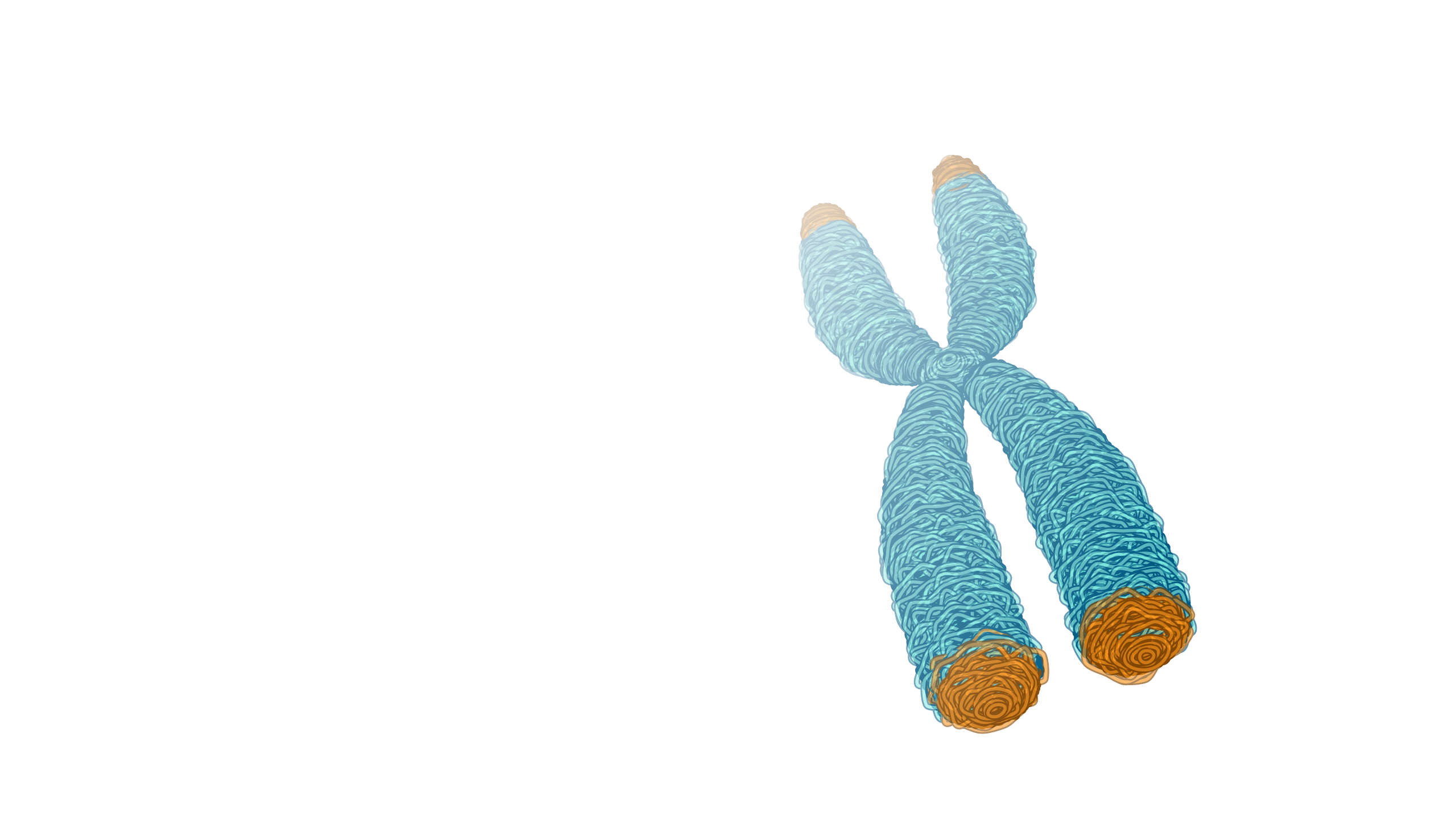
A telomere is a region of repetitive DNA sequences at the end of a chromosome. Telomeres protect the ends of chromosomes from becoming frayed or tangled. Each time a cell divides, the telomeres become slightly shorter. Eventually, they become so short that the cell can no longer divide successfully, and the cell dies.
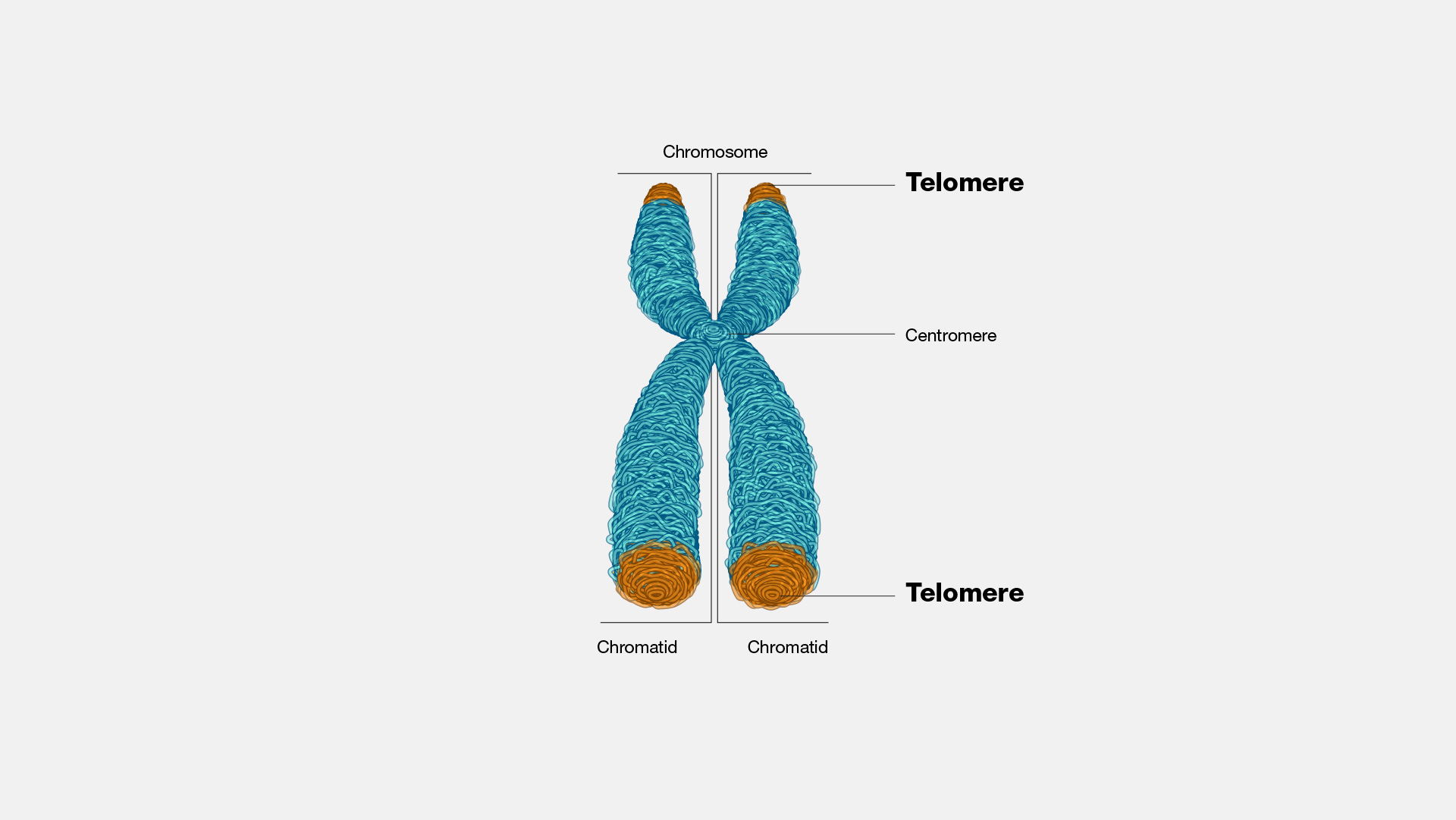
Telomere. A chromosome is essentially a long, long piece of DNA that has really wrapped up and compacted on itself until it looks like the structure you probably picture when I say chromosome. The problem is that the long piece of DNA has two ends, and they're just hanging out there loose. A lot of things could go wrong if those ends aren't protected. They could get cut off, or they could join onto other loose DNA ends, which would be a problem for the cell. Telomeres are how cells protect chromosome ends. The telomere itself is a long stretch of a specific short DNA sequence repeated over and over hundreds of times. At the very end of the telomere is a sort of knot not called the "T-loop," which keeps the chromosome ends from all sticking together. Every time a cell divides, some of those telomere repeats get cut off. So in certain cell types that divide a lot, an enzyme called "telomerase" adds those repeats back so the telomere doesn't get too short.

Deputy Director
Division Of Genome Sciences