 An official website of the United States government




Nucleopore

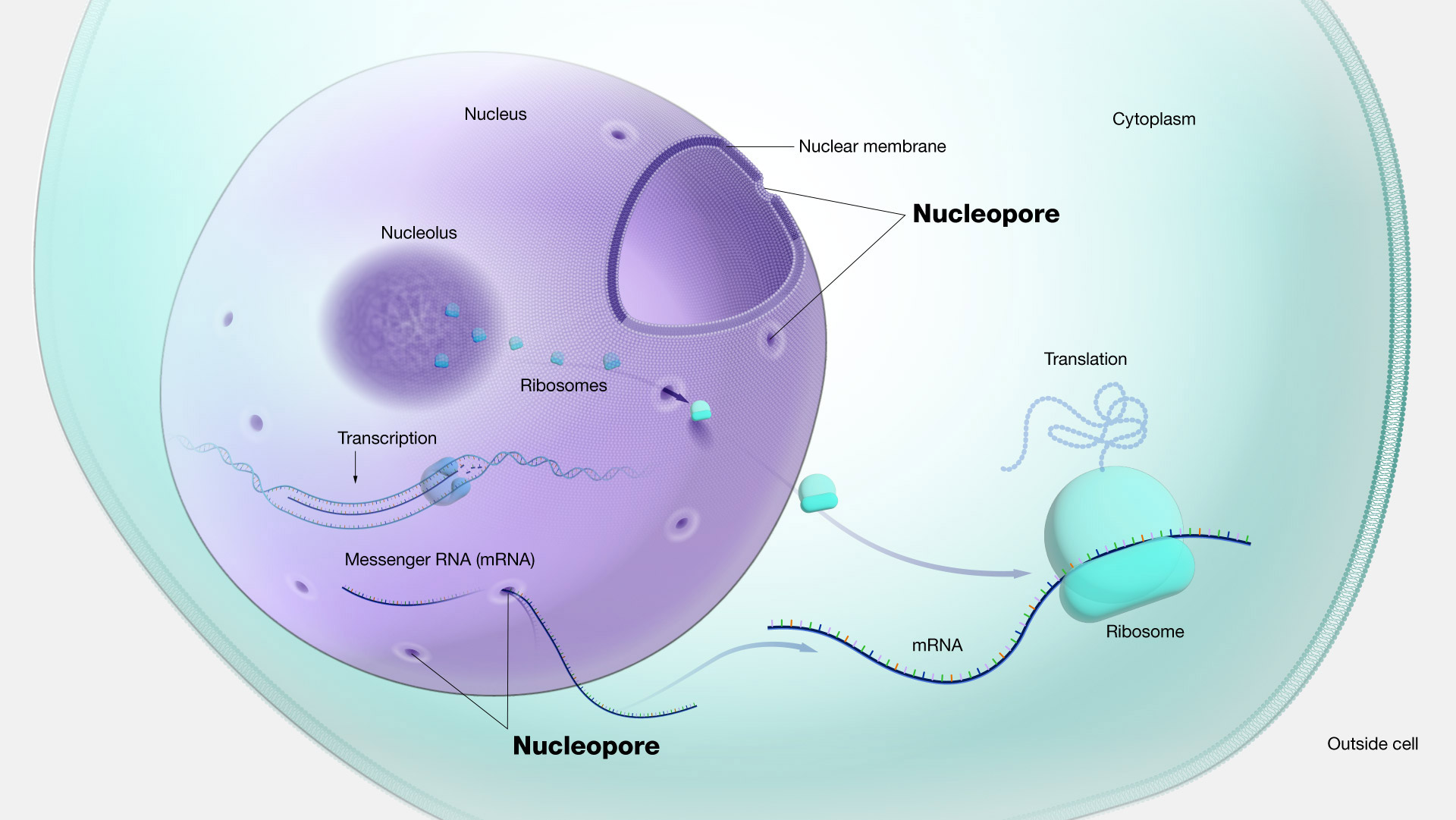
A nucleopore is one of a series of openings found in the cell’s nuclear membrane. Nucleopores serve as channels for the selective transport of nucleic acids and proteins into and out of the cell nucleus.
Nucleopore_transcription_Morris_Stephanie.mp3
Nucleopore. Nucleopores within a nuclear membrane regulate the dynamic process of protein and nucleic acid transport into and out of the nucleus. A good example of this is the transport of messenger RNAs, a type of nucleic acids that are transcribed from genes in the nucleus and then transported to the cytoplasm through nucleopores. Once in the cytoplasm, they are translated into proteins. In the reverse direction, proteins that reside in the cytoplasm until they are activated by chemicals like hormones can then be signaled to enter the nucleus through nucleopores where they bind to specific regions within chromosomes to activate or suppress genes.

Program Director
Division Of Genome Sciences