 An official website of the United States government




Nucleolus
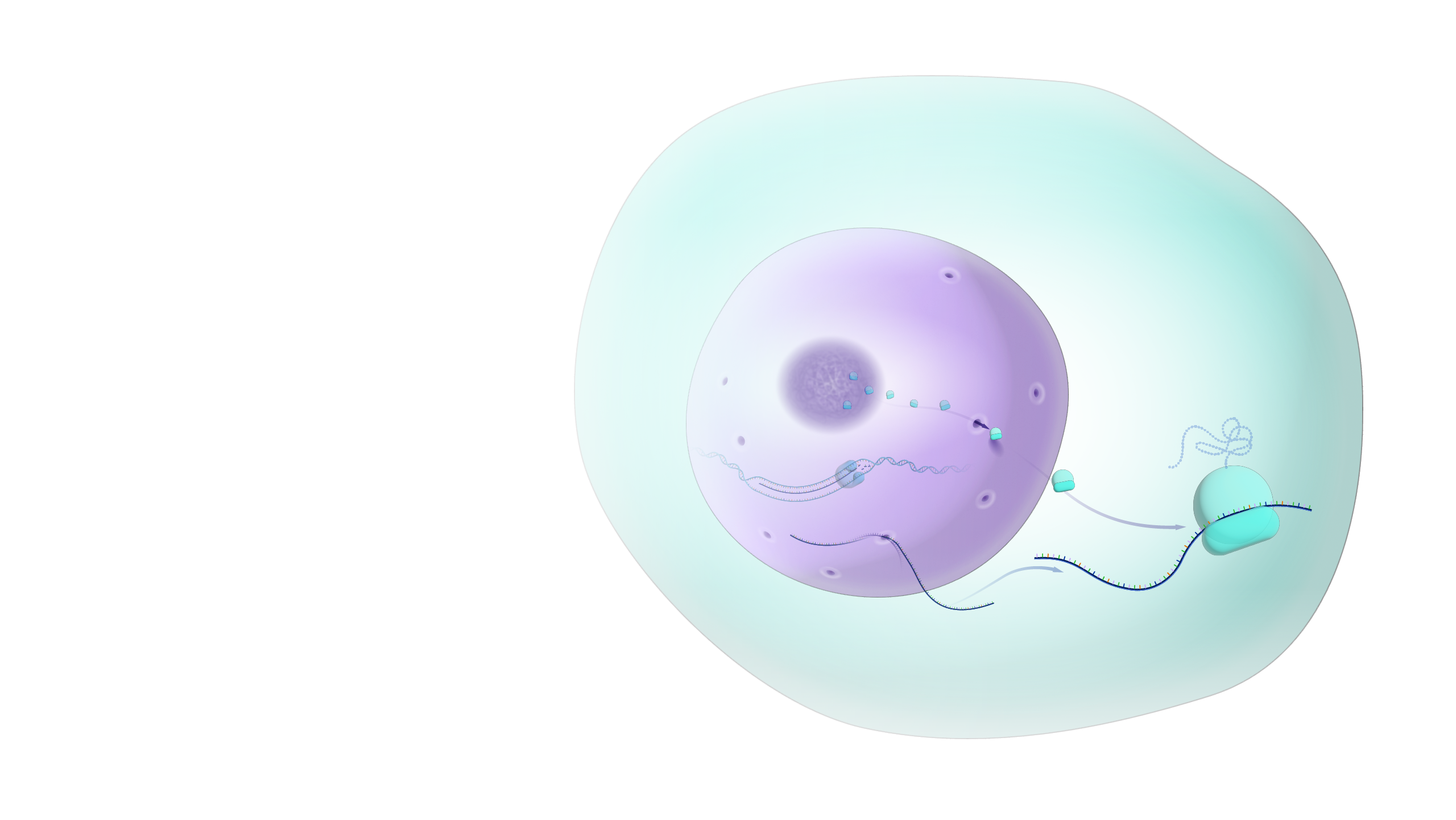
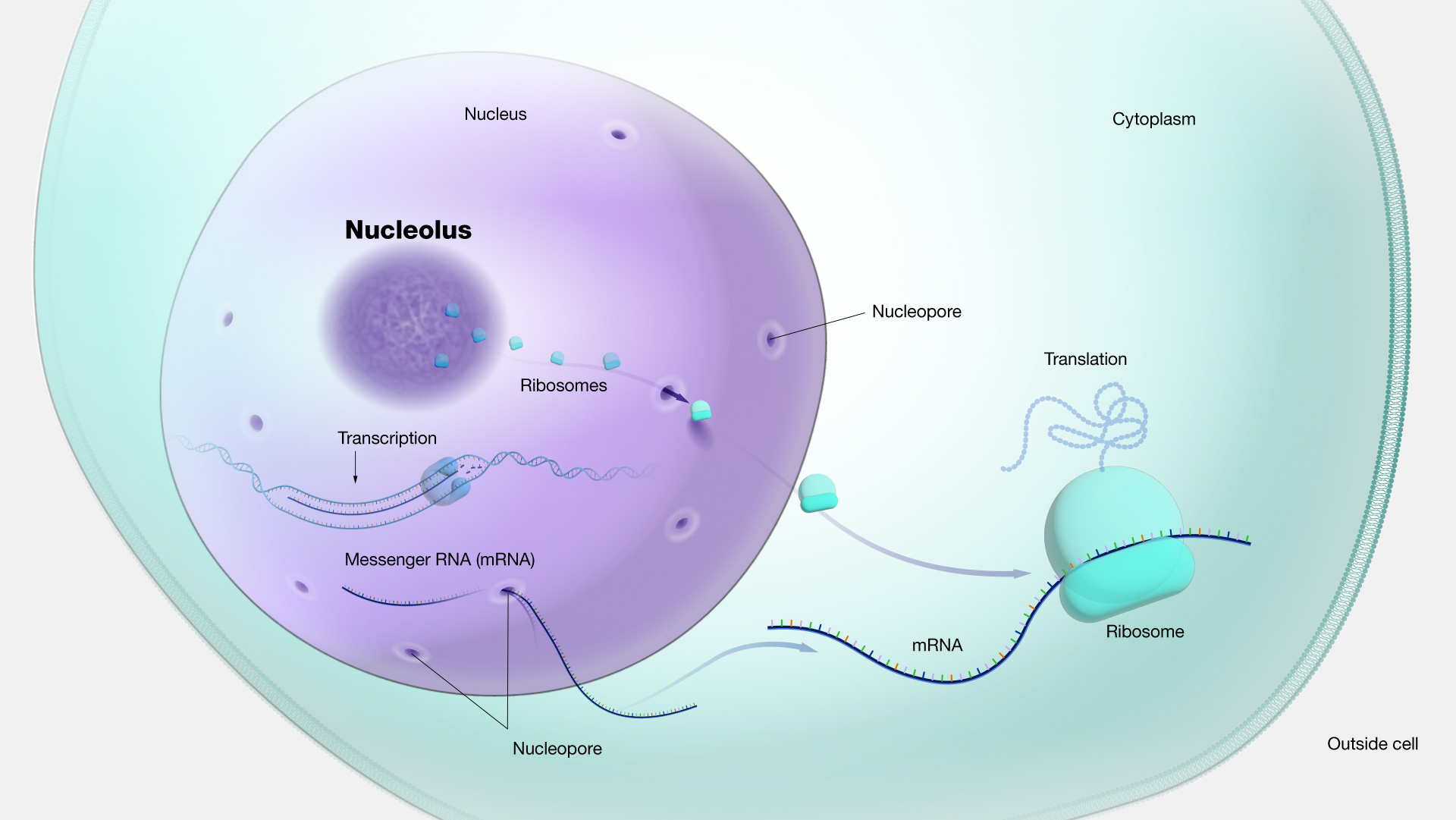
The nucleolus is a spherical structure found in the cell’s nucleus whose primary function is to produce and assemble the cell’s ribosomes. The nucleolus is also where ribosomal RNA genes are transcribed. Once assembled, ribosomes are transported to the cell cytoplasm, where they serve as the sites for protein synthesis.
Nucleolus_transcription_Morris_Stephanie.mp3
Nucleolus. Within a cell's nucleus is a special structure called the nucleolus that houses the ribosomal machinery. It is separate from the rest of the nucleus because of the specialized function. It does not contain chromosomes and is able to shuttle ribosomes and ribosomal RNAs out of the nucleus and into the cytoplasm where protein synthesis occurs. Once in the cytoplasm, the ribosomal RNAs become a part of the ribosome and are responsible for shuttling messenger RNAs through the ribosome to be translated into proteins.

Program Director
Division Of Genome Sciences
Messenger RNA (mRNA) Ribonucleic Acid (RNA) Translation Ribosome Cytoplasm Protein Nucleus