 An official website of the United States government




Crossing Over
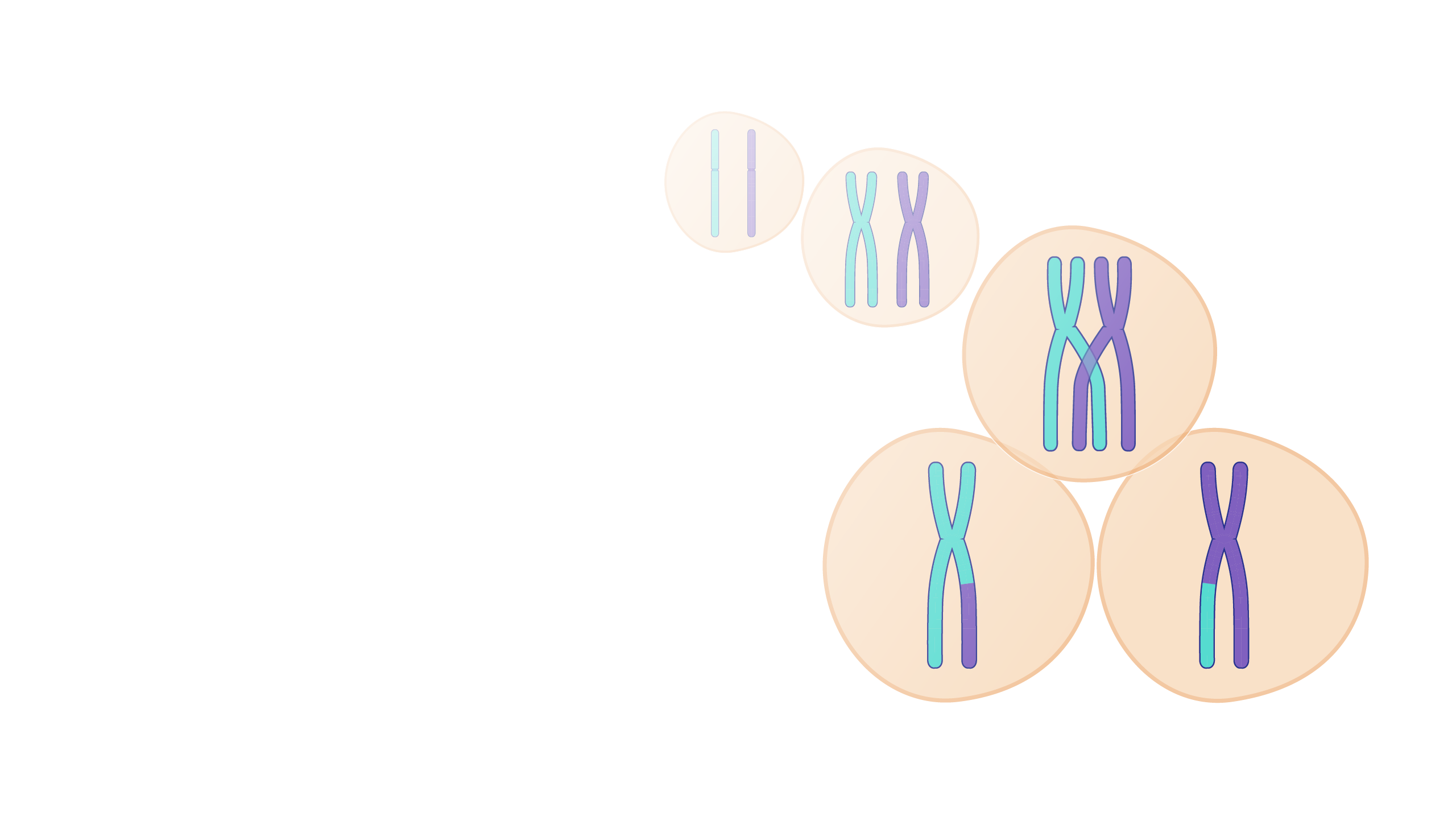
Crossing over, as related to genetics and genomics, refers to the exchange of DNA between paired homologous chromosomes (one from each parent) that occurs during the development of egg and sperm cells (meiosis). This process results in new combinations of alleles in the gametes (egg or sperm) formed, which ensures genomic variation in any offspring produced.
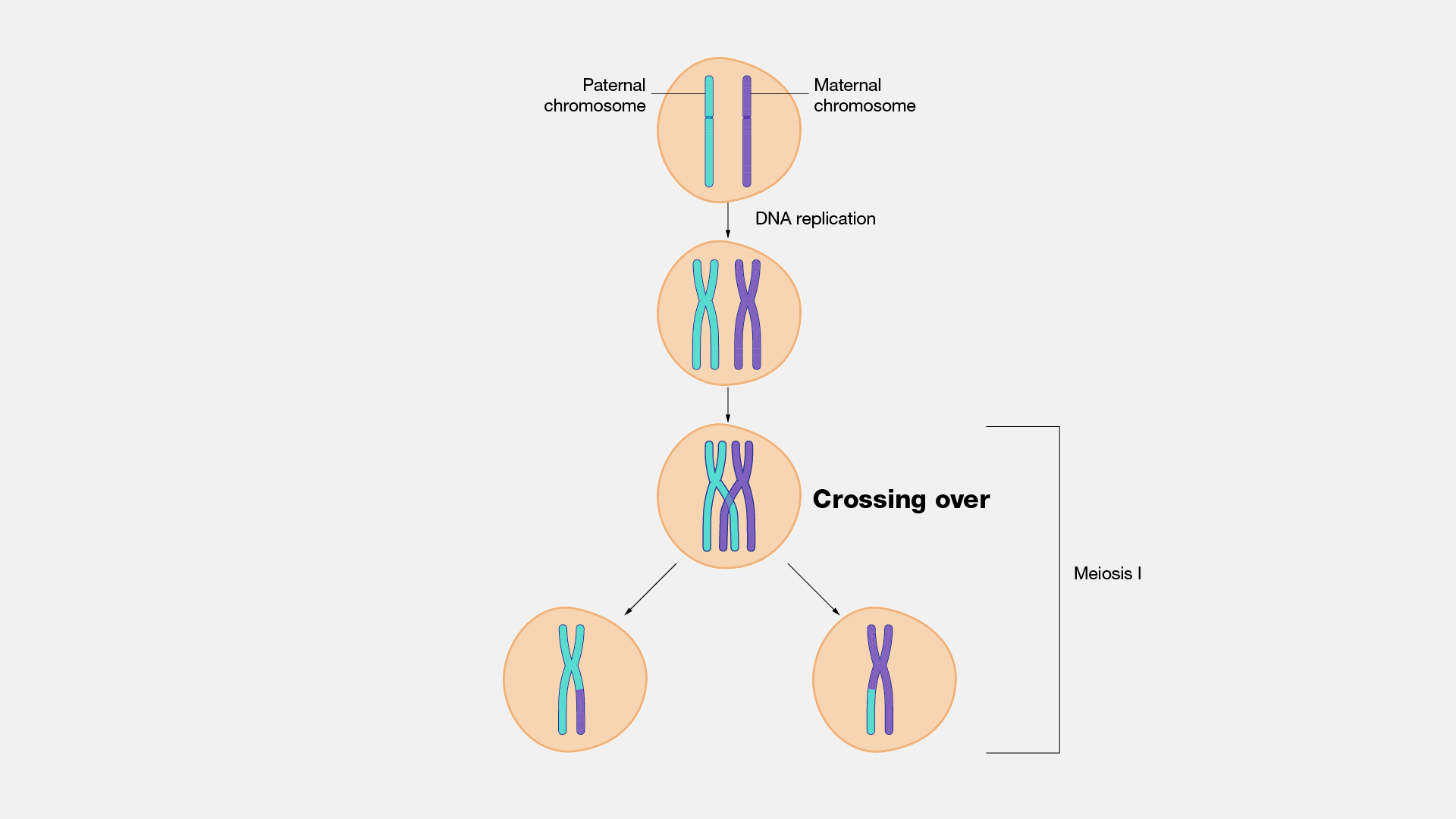
Crossing Over. Crossing over is a cellular process that happens during meiosis when chromosomes of the same type are lined up. When two chromosomes — one from the mother and one from the father — line up, parts of the chromosome can be switched. The two chromosomes contain the same genes, but may have different forms of the genes. The mother's form of a gene, let's say, could be moved to the father's chromosome, and vice versa. This is a very interesting and important biological activity; different combinations of different gene forms are then potentially passed down to offspring. This genetic variation helps to increase the diversity of a species. And diversity strengthens a species' ability to respond to changing environments over time, and therefore evolve.

Program Operations Lead
Division Of Extramural Operations
Deoxyribonucleic Acid (DNA) Germ Line Homologous Recombination Meiosis