 An official website of the United States government




Carrier

A carrier, as related to genetics, is an individual who “carries” and can pass on to its offspring a genomic variant (allele) associated with a disease (or trait) that is inherited in an autosomal recessive or sex-linked manner, and who does not show symptoms of that disease (or features of that trait). The carrier has inherited the variant allele from one parent and a normal allele from the other parent. Any offspring of carriers is at risk of inheriting a variant allele from their parents, which would result in that child having the disease (or trait).
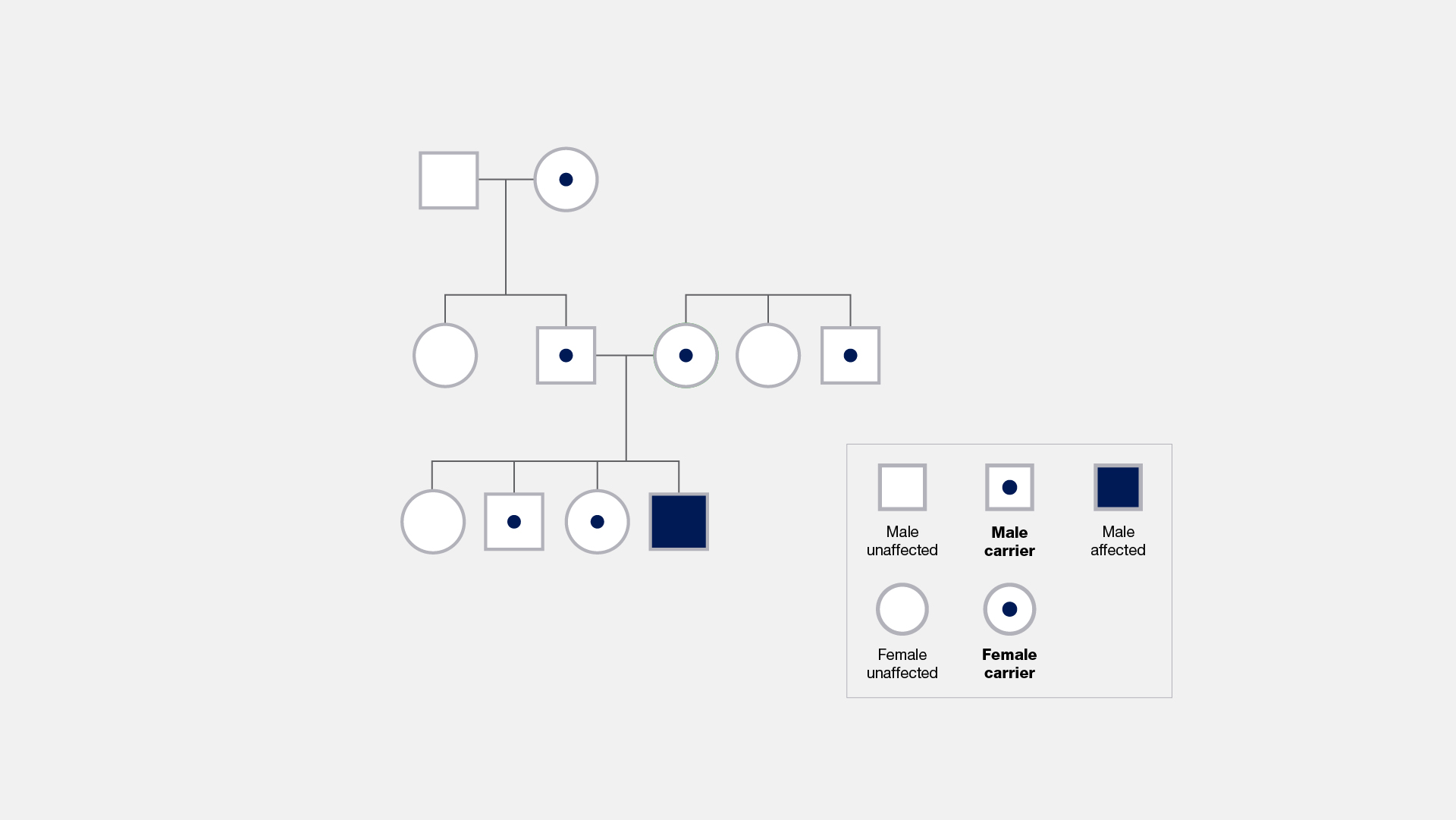
Carrier. The key to understanding carrier in the genetic sense is that, even though we all have two copies of each gene, for some genes you can have only one working copy and essentially have no major medical issues. The challenge arises when you have a child with another person who is also a carrier for the same autosomal recessive disorder, and the child inherits both nonworking copies from each parent. There's a 25% chance of this happening with every pregnancy. Most often, people don't know that they are carriers. As a result, it's now possible to genetically screen prospective parents to determine whether they are carriers for any of the more commonly seen autosomal recessive disorders.

Senior Investigator
Childhood Complex Disease Genomics Section
Allele Gene Inherited Mutation Recessive Traits and Alleles Dominant Carrier Screening Family History