 An official website of the United States government




Cancer
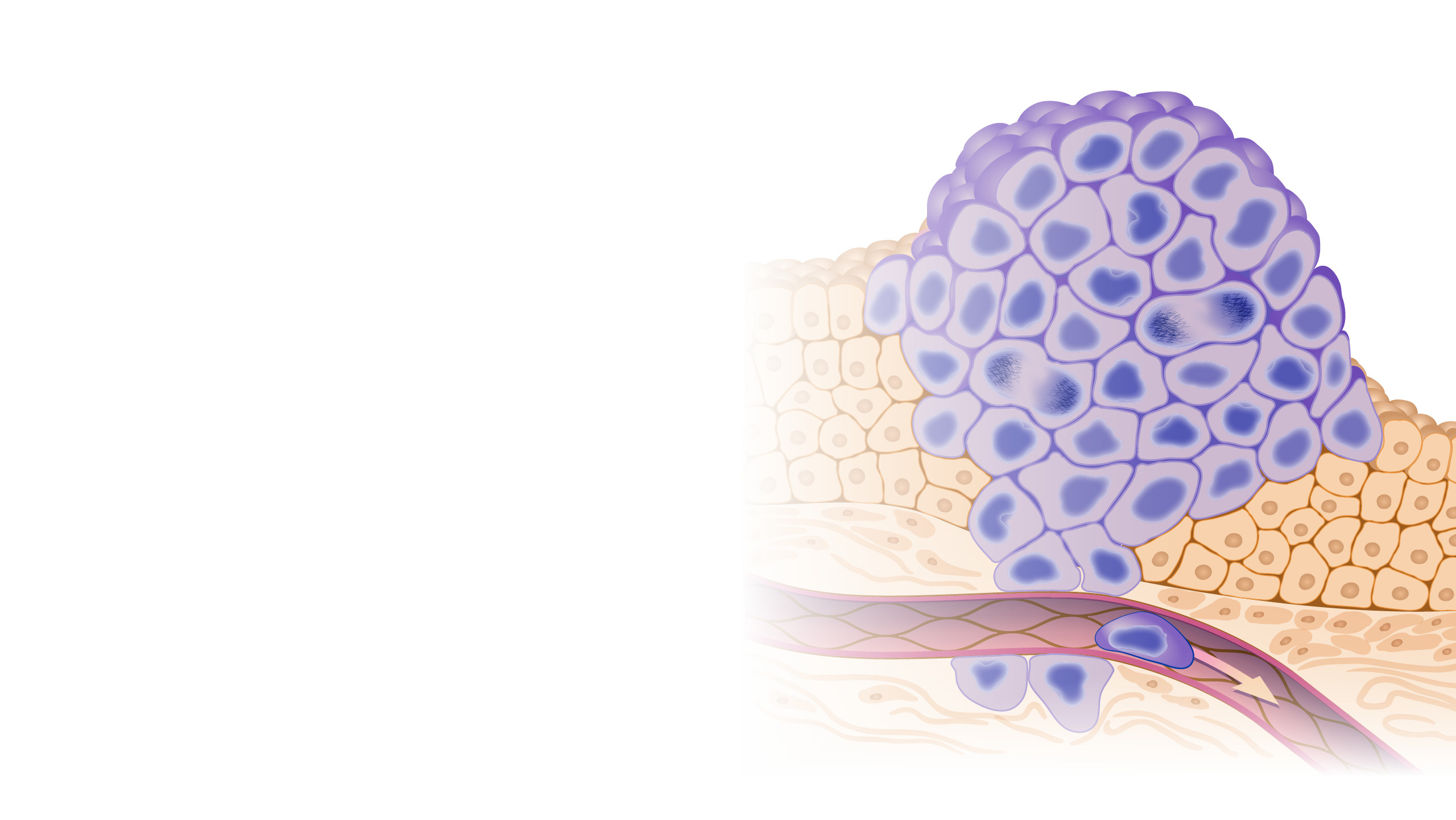
Cancer is a disease in which some of the body’s cells grow uncontrollably. There are many different types of cancer, and each begins when a single cell acquires a genomic change (or mutation) that allows the cell to divide and multiply unchecked. Additional mutations can cause the cancer to spread to other sites. Such mutations can be caused by errors during DNA replication or result from DNA damage due to environmental exposures (such as tobacco smoke or the sun’s ultraviolet rays). In certain cases, mutations in cancer genes are inherited, which increases a person’s risk of developing cancer.
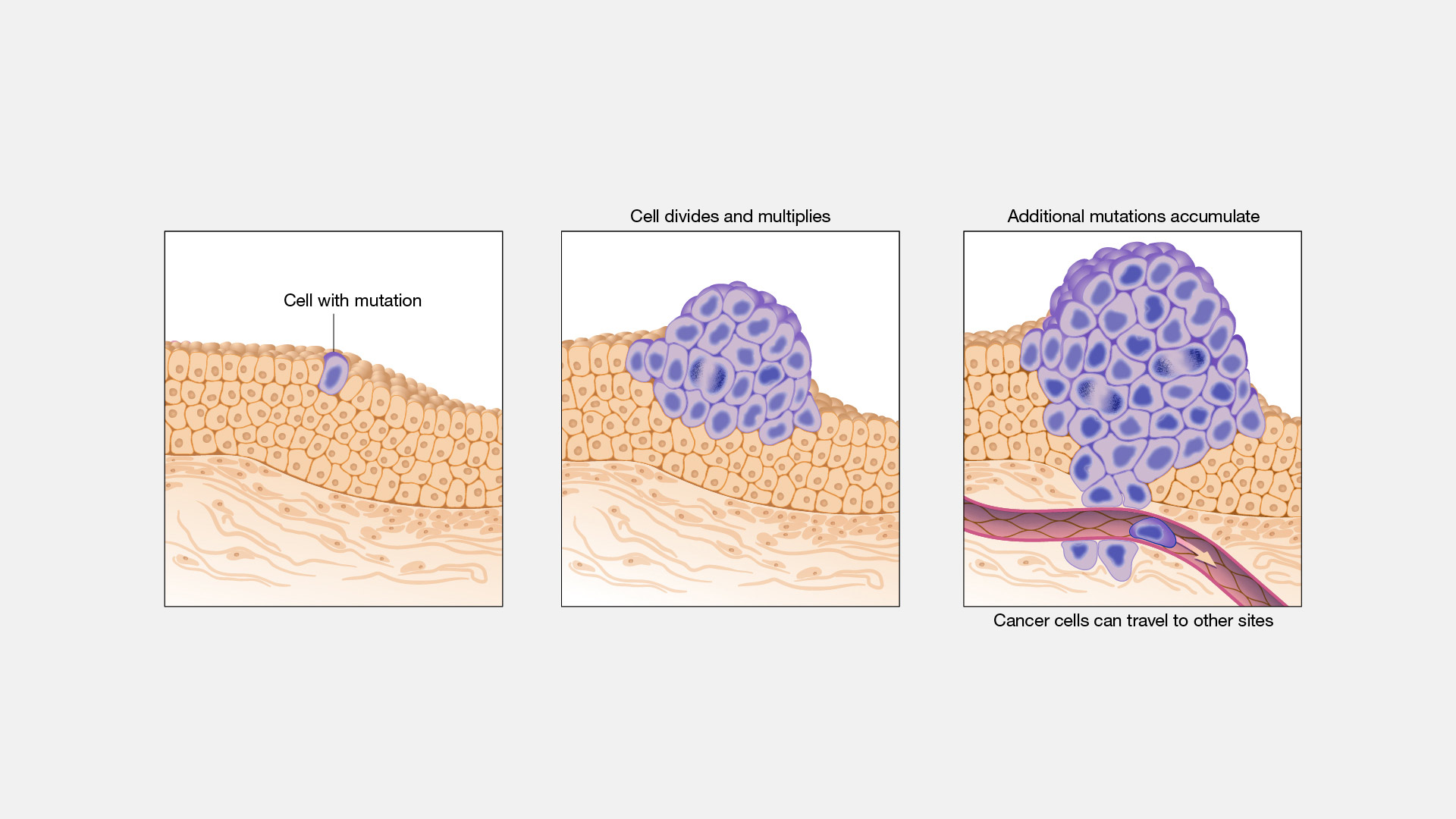
Cancer. Importantly, most mutations that occur in cancer genes don't actually lead to disease. Your body has an excellent system of DNA repair genes that actually remove most such mutations as they occur before they can be propagated.

Chief & NIH Distinguished Investigator
Cancer Genetics and Comparative Genomics Branch
Carcinogen Oncogene Mutation Tumor Suppressor Gene BRCA1/BRCA2 Gene Mutagen Prostate Cancer Cell