 An official website of the United States government




UN meets on chronic, non-communicable diseases (NCDs), adopts declaration on prevention
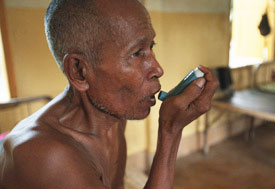
Photo by Masaru Goto/World Bank
The U.N. meeting will address the global
burden of NCDs - both a health concern and
a strain on economic productivity, particularly
in developing countries.
-
ghmsept-oct2011.pdf (2.55 MB)
World leaders at a historic U.N. meeting on NCDs have adopted a declaration calling on members to adopt a set of voluntary global targets for the prevention and control of NCDs by the end of 2012. The document further declares that "prevention must be the cornerstone of the global response" and asks nations to develop targets and indicators to focus on efforts to address the impacts of chronic diseases.
The leaders have gathered at a U.N. High-level Meeting on NCDs in New York City Sept. 19-20, 2011 to address the threat caused by chronic ailments such as heart attacks and strokes, diabetes, cancers and chronic respiratory disease. This is the highest profile meeting ever on non-communicable diseases - the number one cause of death, accounting for nearly two-thirds of deaths globally.
HHS Secretary Kathleen Sebelius, who led the U.S. delegation, announced two new initiatives to curtail tobacco use, a prime contributor to NCDs. First, a new employer-driven partnership to promote smoke-free workspaces in the United States and partner countries. Second, a global public-private partnership to support tobacco cessation efforts, including multilingual text messaging and use of mobile phone technologies.
"These partnerships reflect our belief that in order to turn the tide on chronic disease, we must recruit partners from outside government and from outside the health sector," Sebelius said. "To stay healthy, people need more than high-quality care. They also need clean air and water, nutritious, affordable food and healthy living spaces - and we need to work with partners who can help us achieve these goals."
The global burden of NCDs is an urgent and increasing public health concern and a strain on global economies, particularly as these diseases have become more of a factor in low- and middle-income countries. This is only the second time in the history of the United Nations that the General Assembly is convening heads of state and government on an emerging health issue with a major socioeconomic impact. Ten years ago, a similar meeting on HIV/AIDS sparked a coordinated international response to the crisis.
Meeting participants from NIH include its director, Dr. Francis S. Collins; National Cancer Institute Director Dr. Harold Varmus; Fogarty Director Dr. Roger I. Glass; and National Heart, Lung and Blood Institute Program Director Dr. Arun Chockalingam.
In addition to formal plenary addresses, the U.N. is hosting roundtable discussions on the social and economic impact of NCDs, prevention and control strategies, and ways to foster international collaboration.
In a related development, the U.S. government signed an agreement with the WHO to help developing nations strengthen their capabilities to support the International Health Regulations. The agreement commits the parties to improve the ability of all nations to detect, report and respond to infectious diseases quickly to prevent their spread.
More Information
- Read the September 19, 2011 article from The Lancet about the U.N. High-level meeting on NCDs Accelerating progress on non-communicable diseases , co-authored by Fogarty Director Dr. Roger I. Glass.
- Read the text of HHS Secretary Kathleen Sebelius's speech to the U.N. General Assembly High-level Meeting on Non-communicable Diseases .
- Access key documents from the United Nations High-level Meeting on non-communicable diseases , including the Political Declaration on the prevention and control of non-communicable diseases.
- U.S. Government and World Health Organization Sign Agreement to Help Developing Countries Strengthen Their Capabilities to Meet International Health Regulations - September 19, 2011 from the State Department.
Learn more about Chronic, Non-communicable Diseases .
Updated September 20, 2011
To view Adobe PDF files, download current, free accessible plug-ins from Adobe's website .
To view Adobe PDF files, download current, free accessible plug-ins from Adobe's website .