 An official website of the United States government




NIH, HHS discuss health systems strengthening, sickle cell disease at US-Africa summit
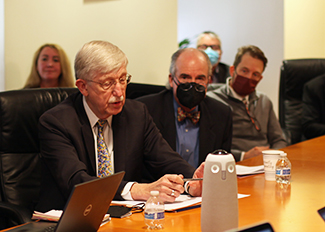
HHS hosted a roundtable on health equity and health systems strengthening with delegates from 12 African countries plus the African Union as part of the 2022 U.S.-Africa Leaders Summit which took place in Washington, DC, in mid-December. Fogarty Acting Director Peter Kilmarx represented NIH and focused on the importance of health research as a key contributor to the health infrastructure and the broader medical workforce. "The delegates were particularly energized around the research discussion and spoke favorably about research to address health challenges and develop evidence-based policies," noted Kilmarx. Jennifer Troyer of the National Human Genome Research Institute (NHGRI), Francis Collins, former NIH Director now at NHGRI, and representatives from the National Cancer Institute (NCI) and the National Institute of Mental Health (NIMH) also attended. Delegates agreed on "the need for local capacity, new government commitment and investment in research as retention factors for top national talent," Kilmarx added.
Building on the first summit , which took place in 2014, the second U.S.-Africa Leaders Summit covered topics from economic engagement to food security and health cooperation over three days. Among the several side events that took place was a roundtable on global partnerships for sickle cell disease (SCD) held at the Embassy of the Republic of Tanzania. Kilmarx and Collins, along with George Mensah from the National Heart, Lung, and Blood Institute (NHLBI), participated.
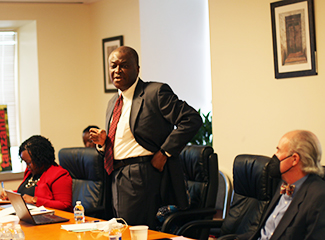
Dr. Collins echoed this sentiment, "We have to do both–address current patient needs and conduct bold research." An outpatient procedure to treat SCD not requiring an advanced degree to perform and done without expensive equipment is "the dream," Collins said. However, a reframing from "donorship" to "ownership" is required with African institutions and governments ensuring the sustainability of such initiatives. Collins referred to the Human Heredity and Health in Africa (H3Africa) and Harnessing Data Science for Health Discovery and Innovation in Africa (DS-I Africa) programs—in which grants went directly to African organizations resulting in new research networks, South-South collaboration, and diminished brain drain—as a model. At both the SCD event and the Ministerial Roundtable, Collins championed a concept developed by African scientists and H3Africa PIs Christian Happi, Ambroise Wonkam, and Nicola Mulder for African genomics centers of excellence throughout the continent, each focused on their particular interest whether it be pandemic preparedness, infectious diseases, or noncommunicable diseases like SCD. There are economic arguments in addition to ones for public health for such a venture, Collins said.
On the main agenda for the Summit was the “ Partnering for Sustainable Health Cooperation " forum, hosted by Loyce Pace, Assistant Secretary for Global Affairs at HHS which included remarks by HHS Secretary Xavier Becerra, President Yoweri Museveni of Uganda, President Mokgweetsi Masisi of Botswana—who called out former Fogarty Fellow Sikhulile Moyo's discovery of the omicron variant of COVID-19—and CDC Director Rachel Walensky. The forum also included two panels which addressed investment in public health initiatives and the expansion and strengthening of Africa's health care workforce, including the Biden-Harris Administration's Global Health Worker Initiative and USAID's partnerships to accelerate primary health care in African nations .
More Information
- U.S.-Africa Leaders Summit on U.S. State Department website
- FACT SHEET: The Biden-Harris Administration Global Health Worker Initiative on the White House website
- FACT SHEET: U.S-Africa Partnership in Health Cooperation
- United States Commits to Reducing Inequities in Access to Quality Health Services in Africa Through Strategic and Coordinated Health Workforce Investments , USAID news, December 13, 2022
- Related NHLBI grant: Sickle Pan-African Research Consortium Clinical Coordinating Center (SPARCO Center)
Updaed February 13, 2023
To view Adobe PDF files, download current, free accessible plug-ins from Adobe's website .