 An official website of the United States government




Global funders award $30M for diabetes research
The largest international research funders are jointly awarding more than $30 million for diabetes research in developing countries - where the WHO says 80 percent of diabetes deaths occur. The Global Alliance for Chronic Diseases (GACD) , comprising top research agencies in Australia, Canada, China, Europe, India, Mexico, South Africa, Thailand, the U.K. and the U.S., previously generated $22 million in hypertension grants and is planning a similar funding opportunity to support lung disease studies .
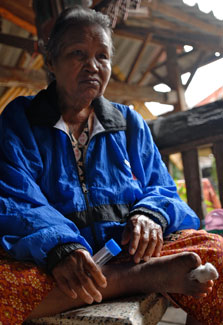
Photo by Mark Tan, courtesy of Photoshare
The world's top research institutes have
joined together to fund more than $30 million
in diabetes research in low- and
middle-income countries.
Most GACD-generated projects include investigators at both developed and developing country institutions, to help build both research capacity and scientific evidence. The new projects targeting Type 2 diabetes will examine various underlying mechanisms for control and prevention, such as family and institutional environments, health systems, technology and economic, social and cultural factors, as well as disease management.
Diabetes is surging around the world, especially in developing countries. By 2035, nearly 600 million people will have the disease and most will be under 60 years of age, according to the International Diabetes Federation. Deaths from this and other noncommunicable diseases account for nearly two-thirds of all fatalities worldwide, according to the WHO.
NIH GACD Diabetes Awards
- Fogarty award: Implementation of Foot Thermometry and SMS to Prevent Diabetic Foot Ulcer
Universidad Peruana Cayetano Heredia, Lima, Peru
Principal Investigator: Dr. Jaime Miranda - NHLBI award: Bridging Income Generation with Group Integrated Care (BIGPIC)
Icahn School of Medicine at Mount Sinai
Principal Investigator: Rajesh Vedanthan
The NIH - a founding GACD member and currently represented by Fogarty Director Dr. Roger I. Glass - has issued two diabetes-related grants. Fogarty, with co-funding from the National Institute of Nursing Research (NINR), awarded a two-year, $330,000 grant to Peru’s Universidad Peruana Cayetano Heredia. Researchers will investigate whether a low-cost intervention can prevent diabetic foot ulcers from forming - once they erupt, they are typically very difficult to treat. Patients will be asked to monitor their foot skin warmth at home using a simple thermometer and alert health care workers to any changes, enabling preventive treatment.
The second, from the National Heart, Lung and Blood Institute (NHLBI) to the Icahn School of Medicine at Mount Sinai, is for up to $3.3 million over five years. Diabetes is a major risk factor for cardiovascular disease (CVD) and to optimize preventive care in western Kenya, researchers will develop and test an intervention in people with, or at risk for, diabetes. The study will assess if offering care in group visits and including small financial incentives such as payments, credit or insurance improves CVD outcomes.
"It is impressive that these research funders can come together around a common problem such a diabetes - an epidemic that is shared by all and in urgent need of new interventions," said Glass.
More Information
- Learn more about the Global Alliance for Chronic Diseases and the research projects supported by GACD .
- Read the August 6, 2014 GACD new release Global Alliance for Chronic Disease identifies lung diseases as next research priority .
- Read the related article NIH joins global effort to fund diabetes research from the January / February 2014 issue of Global Health Matters.
- Access a collection of diabetes information and resources .
To view Adobe PDF files, download current, free accessible plug-ins from Adobe's website .