 An official website of the United States government




Fogarty Fellow recognized for omicron discovery
By Susan Scutti
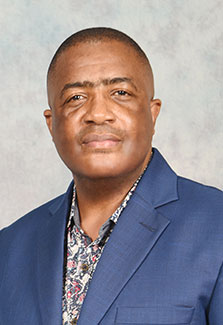
Photo courtesy of Botswana Harvard Partnership
Sikhulile Moyo, Ph.D., MPH
- Fogarty Fellow: 2017-2018
- U.S. institution: Harvard T.H. Chan School of Public Health
- Foreign institutions: Stellenbosch University, South Africa
- Research interests: Evolutionary trends and dynamics of HIV-1C in Botswana
- Global Health Program for Fellows and Scholars
- Profiles of Fogarty Fellows and Scholars
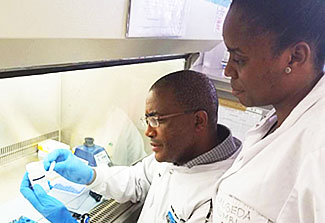
After decades spent using genomic sequencing to study HIV/AIDS and other diseases, former Fogarty Fellow Dr. Sikhulile Moyo was well-prepared to pivot to COVID-19 when it struck Botswana. Invited to join his country’s presidential pandemic task force, Moyo helped establish national guidelines for testing and genomic surveillance. Adhering to a policy of daily sampling and weekly sequencing, Moyo’s Botswana Harvard AIDS Institute lab team found an intriguing pattern of mutations among the SARS-CoV-2 samples collected in mid-November 2021. “So many mutations!,” he noted. “We checked the international databases and realized they had not been seen anywhere before.”
He immediately alerted Botswana’s health department, which sent him more information. Sifting through this data, Moyo discovered that the four individuals who’d provided samples with the mutations had traveled and entered the country together. Moyo’s team quickly deposited the sequences into the international GISAID database. Later that same day, South African scientists reported their own six sequences while a Hong Kong team posted a single sequence. Within a week, the WHO’s virus working group had classified Moyo’s discovery as a “variant of concern.”
Moyo said he leveraged his skills in next-generation sequencing and bioinformatics that he acquired with support from Fogarty HIV research training grants. “I was able to establish—from ground zero—sequencing of SARS-CoV-2 here in Botswana using the same technology I’d used for HIV.” Previously, Moyo translated his HIV knowledge to tackle diseases such as hepatitis, human papillomavirus, noroviruses and tuberculosis. He also mentors students, helping them use sequence data to better understand pathogens. Indirectly, Fogarty played an important role in his omicron discovery story, said Moyo. He serves as a mentor on a Fogarty COVID-19 supplemental grant that is supporting two of the scientists who helped with the discovery.
Some of Moyo’s Ph.D. work took place at the Harvard School of Public Health, where he designed a research study from scratch, and learned about the project submission process, the intricacies of informed consent, methods for storing biological specimens and how to design his own protocols. This work, which was also funded by the NIH’s National Institute of Mental Health, led to six publications and new research collaborations.
The omicron discovery led to a “roller coaster” of negative and positive effects, said Moyo. “We were transparent, we alerted the world to a useful signal. But, within days, a few hours really, some borders were closed, flights were canceled and our countries were blacklisted.” Such a negative response encourages dishonesty, Moyo suggested. “There is great value in scientific transparency. For example, the ability to immediately design a new vaccine or new therapy is based on sharing sequences.” Besides, closing a border may incorrectly assume that the virus has not already begun to circulate within other regions. Still, the discovery also led to positive effects, including more PCR kits for his lab. Moyo believes that this bittersweet experience, in the end, will spur increased scientific collaboration with global partners.
More Information
- Bio of Dr. Moyo , Botswana Harvard AIDS Institute
- Publications of research Dr. Moyo conducted while a Fogarty Fellow:
- Low rates of nucleoside reverse transcriptase inhibitor and nonnucleoside reverse transcriptase inhibitor drug resistance in Botswana [PDF]
AIDS, May 2019 - Cross-sectional estimates revealed high HIV incidence in Botswana rural communities in the era of successful ART scale-up in 2013-2015
PLoS One , October 2018 - Molecular Characterization of Near Full-Length Genomes of Hepatitis B Virus Isolated from Predominantly HIV Infected Individuals in Botswana
Genes (Basel) September 2018 - In Silico Analysis of Hepatitis B Virus Occult Associated Mutations in Botswana Using a Novel Algorithm
Genes (Basel) August 2018
- Low rates of nucleoside reverse transcriptase inhibitor and nonnucleoside reverse transcriptase inhibitor drug resistance in Botswana [PDF]
To view Adobe PDF files, download current, free accessible plug-ins from Adobe's website .