 An official website of the United States government




Evaluating meningitis causes among patients in northern Uganda
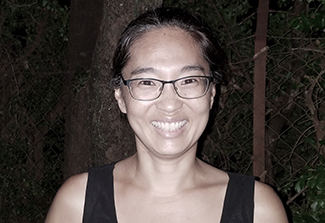
Abigail Link, RN, MPH, Ph.D.
- Fogarty Fellow: 2020-2021
- U.S. institution: University of Minnesota
- Foreign institution: Makerere University, Kampala
- Research topic: Meningitis surveillance and outcomes in Uganda
- Global Health Program for Fellows and Scholars
- Profiles of Fogarty Fellows and Scholars
In northern Uganda, little is known about meningitis—its specific causes, the number of people affected, the impact of prevention measures. Meningitis is an infection and inflammation of the fluid and membranes around the brain and spinal cord caused by viruses, bacteria or fungi. Dr. Abigail Link became interested in how cryptococcal (fungal) meningitis (CM) was diagnosed and treated in the region when a scientist friend visited her in Lira, where she worked as a lecturer. “Here in the north, if the hospital is out of stock, costs are basically shifted to patients. Those who can't afford the diagnostic test or medication don't get treated,” explained Link.
Seeing this gap, her former colleague, Dr. Paul Bohjanen, who had been researching CM in Kampala, helped start a program where Lira patients could get treated even if unable to pay. “For my Ph.D. dissertation, I helped analyze that program. What we found is about half of the patients with symptoms did not have a diagnosis of CM.” An opportunistic infection that afflicts people living with HIV, cryptococcal meningitis symptoms include fever, intense headache, stiff neck, nausea, vomiting, sensitivity to light, drowsiness and confusion.
Link decided to continue this research for a Fogarty project by answering the question: If not CM, what other types of meningitis are making these Ugandan patients sick? Using data from a regional hospital, she will determine disease causes and conduct surveys and interviews with both patients and providers to understand their experiences as well as the barriers to improving health outcomes. “We're in the middle of that right now, enrolling patients in the program, and, come September, we’ll do a preliminary analysis,” she said.
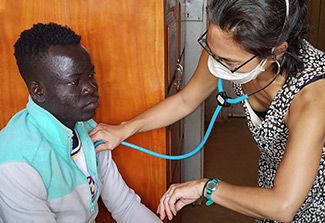
COVID-19 delays prevented her from completing her project in 2021 as planned. Though a disruptive force, the pandemic also brought unexpected insight. “I learned how much I can rely on the people on the ground,” she said. Though her work is ongoing, Link already has published an evaluation of cryptococcal meningitis cases. She also plans to further train her team, which now includes a manager, three nurses and three medical officers, to help collect and analyze new data. “They’ve begun to see the fruits of their labor in the form of findings from the patients that have come in over the past five to six years.”
Working in Lira prior to her Fogarty project helped her “get buy-in and partners because people have seen me here for the past five years in different roles. In any society it's about making connections so that was definitely advantageous for me,” said Link.
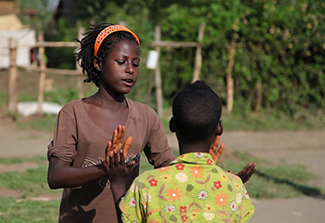
Fogarty’s staff and project management lessons taught her much-needed organizational skills. She also praised the networking opportunities provided by Fogarty. “Other fellows working in your same country can be great guides and mentors. I’ve asked other Ugandan researchers, ‘I'm thinking about this for a project — what kind of cultural differences should I be aware of?’” Most of all she appreciated the amount of time provided by a Fogarty fellowship. “Unfortunately, we global health researchers tend to form a research question based on what we feel is the need. But it’s more important to interact with the people and understand what gaps they see.”
Looking to the future, Link plans to apply for NIH funding to “develop a mental health screening tool that will be implemented in HIV clinics in Lira.” She also plans to collaborate with Lira University on a training grant. “I chose nursing versus medicine because I wanted to have quality time with patients and take on the role of a caregiver versus the role of a person who diagnosis and prescribes,” said Link. She hopes her time spent in Uganda imparts sustainable change. "If I can do that through relationships I create, then at the end of the day I can feel like I accomplished something.”
More Information
- WHO Meningitis fact sheet
- Delays in Cryptococcal Meningitis Diagnosis and Care: A Mixed Methods Study in Rural Uganda
Annals of Global Health via PubMed, March 2022 - High Burden of Cryptococcal Meningitis Among Antiretroviral Therapy-Experienced Human Immunodeficiency Virus-Infected Patients in Northern Uganda in the Era of "Test and Treat": Implications for Cryptococcal Screening Programs
Open Forum Infectious Diseases via PubMed, January 2022
Updated August 10, 2022
To view Adobe PDF files, download current, free accessible plug-ins from Adobe's website .