 An official website of the United States government




Behavioral Economics in Global Health
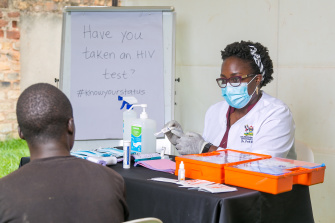
The Center for Global Health Studies is interested in exploring the state of the science and practice of behavioral economics, with the aim of understanding how to best strengthen its impact and promote its effective use in health programming. To date, CGHS has co-hosted a satellite session at the 24th annual International AIDS Society Conference . CGHS will continue to work with interested NIH Institutes and Centers to explore ways to support the science of behavioral economics to improve global health.
Publications
- Commentary: We must invest in behavioural economics for the HIV response , co-authored by Fogarty’s Susan Vorkoper
Nature Human Behaviour, July 18, 2023
Past Events
Behavioral Economics Applications to HIV Prevention and Treatment: Looking Back and Thinking Ahead with Dr. Harsha Thirumurthy
November 4, 2022
Following major scientific advances and an unprecedented mobilization of resources, biomedical solutions for HIV prevention and treatment are now more widely available than ever before. However, human behavior continues to play a central role in ongoing efforts to maximize the effectiveness of biomedical HIV services and end the HIV epidemic.
As part of the NIMH DAR Friday Distinguished Speaker Series, this presentation reviews recent studies that have applied behavioral economics insights to HIV prevention and treatment, identify strengths and limitations of existing research, and suggest several priorities for using behavioral economics in future research and implementation efforts.
2022 Virtual Satellite for the 24th International AIDS Conference
Behavioral Economics and Conditional Incentives to Strengthen HIV Treatment and Prevention: Actioning the Science
August 1, 2022
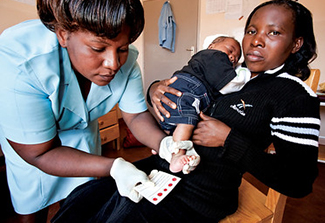
CGHS and the National Institute of Mental Health’s Division of AIDS Research led a satellite session at the AIDS 2022 Conference to examine the use of behavioral economics and conditional incentives in HIV treatment and prevention programs. The intended audience for this satellite are researchers, implementers, and funders who are curious about behavioral economic and conditional incentives approaches. The satellite session opened with research scientists who reviewed core concepts in behavioral economics and contemporary forms of conditional economic incentives, as well as their mechanisms of action, and the evidence base for their impact in the HIV treatment and prevention continua. The symposium then highlighted examples of real-world HIV treatment and preventions program that currently integrate behavioral economic or conditional incentives into specialized clinics or routine services. It concluded with a multisectoral panel with community members, scientists, technologists, and high-level government and public health officials; this group discussed key directions for further research, implementation, and financing of behavioral economic and conditional incentives in HIV treatment and prevention delivery.
Session Outline
| Agenda | Panelists |
|---|---|
| Welcome and introduction of session agenda | Dianne Rausch, National Institute of Mental Health Rachel Sturke, Fogarty International Center |
| What are conditional incentives and behavioral economic approaches? A review of key concepts | Harsha Thirumurthy, University of Pennsylvania |
| What is the current evidence for the impact of conditional incentives and behavioral economic approaches in HIV care and prevention? | Sandra McCoy, University of California, Berkeley |
| Example of HIV treatment and prevention programs that utilize incentives and behavioral economic approaches: Indlela | Sofie Pascoe, University of Witwatersrand Candice Chetty-Makkan, University of Witwatersrand |
| Example of HIV treatment and prevention programs that utilize incentives and behavioral economic approaches: Seattle MAX clinic | Julie Dombrowski, University of Washington |
| Advancing the implementation and use of behavioral economic and incentives approaches: Stakeholder perspectives | Facilitated by: Michael Stirratt, National Institute of Mental Health Susan Vorkoper, Fogarty International Center Panelists: Omar Galarraga, Brown University Catherine Godfrey, PEPFAR Sebastian Linnemayr, RAND Corporation Natalino Mwenda, Rasello Inc. Prosper Njau, Ministry of Health and Social Welfare, Tanzania |
| Conclusion with top-line themes and directions | Dianne Rausch, National Institute of Mental Health Rachel Sturke, Fogarty International Center |
Inquiries
Susan Vorkoper, M.P.H., M.S.W. Public Health Advisor Fogarty Division of International Science Policy, Planning and Evaluation Email: Susan.Vorkoper@nih.gov
Updated July 24, 2023