 An official website of the United States government




Phase II Awardees Vergara Team

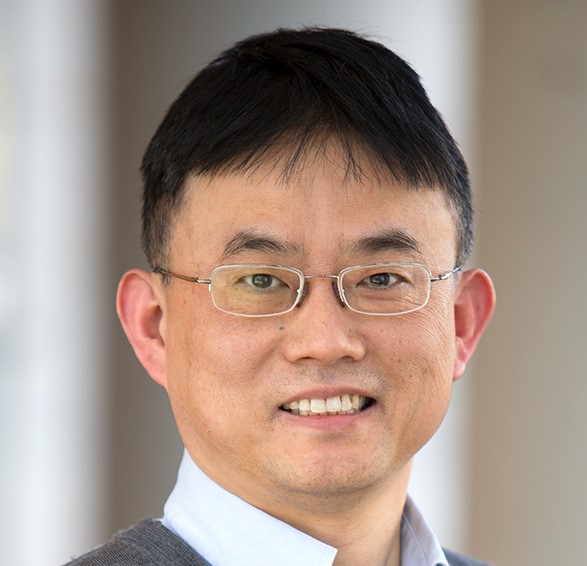
October 2018 Check-In Winner
NEI awarded $25,000 to a team led by Wei Liu, Ph.D., Albert Einstein College of Medicine, for demonstrating progress toward the development of a living model of the human retina, the light-sensitive tissue at the back of the eye.
Winning Team
- Wei Liu, Ph.D., Albert Einstein College of Medicine
- Albert Lowe, Albert Einstein College of Medicine
Collaborators
- Rui Chen, Ph.D., Baylor College of Medicine
- Sangbae Kim, Ph.D., Baylor College of Medicine
- Z. Jimmy Zhou, Ph.D., Yale School of Medicine
- Seunghoon Lee, Ph.D., Yale School of Medicine
- Margaret M. DeAngelis, Ph.D., University of Utah
- Ales Cvekl, Ph.D., Albert Einstein College of Medicine
Liu’s submission demonstrated the generation of mini retinas similar in composition to the human macula, a part of the retina used for central, high-resolution vision. Specifically, the mini retinas include cone photoreceptors, the type of light-sensing retinal cell needed for color vision.
Phase I Awardees
NEI awarded $90,000 in prize money to a team led by Erin Lavik, Sc.D., at the University of Maryland, Baltimore County, for its concept to create a living model of the human retina. Lavik’s team participated in the 3-D Retina Organoid Challenge (3-D ROC) “ideation” phase, which asked participants for ideas to generate human retinas from stem cells. Concepts were evaluated based on their innovativeness and feasibility. A review panel assessed how each proposal addressed scientific challenges such as how to assemble distinct and anatomically correct layers of retinal tissue, assess retinal cell function, and use the prototypes to understand diseases or test therapies.
Winning Team
- Erin Lavik, ScD, University of Maryland, Baltimore County
- Steven Bernstein, MD, PhD, University of Maryland Medical School
- Adam Day, University of Maryland, Baltimore County
- Bryan Ibarra, University of Miami
The team’s idea is to build a retina by screen printing adult neural progenitor-derived retinal neurons in layers that mimic the structure of the human retina. The system is scalable and efficient which should enable the high reproducibility and increased throughput necessary for drug testing.
Five teams were also recognized with honorable mention