 An official website of the United States government




The burden of Alzheimer’s disease and related dementias
Alzheimer’s disease and related dementias are complex brain disorders that slowly destroy memory and thinking skills, among other debilitating symptoms. While dementia is more common in older adults, it is not a normal part of aging. An estimated 6.9 million Americans are currently living with Alzheimer’s . It is likely these numbers will increase as the nation’s population ages. Worldwide, more than 50 million people have dementia, a diagnosis that may include Alzheimer’s or a related disorder, such as frontotemporal disorders , Lewy body dementia , or vascular contributions to cognitive impairment and dementia . Many individuals may in fact have two or more forms at the same time. This public health challenge takes a tremendous emotional, physical, and financial toll on those living with these diseases and their families and care partners, underscoring the urgent need for effective diagnostics, preventions, treatments, and care.
NIH leads the nation’s dementia research strategy
The National Institutes of Health (NIH) drives the nation’s research to better understand the complex and varied causes of Alzheimer’s and related dementias, identify early signs of disease, develop effective interventions to prevent or delay disease progression, and improve care and support for those living with dementia as well as their care partners. This work is carried out across NIH, with the National Institute on Aging (NIA) and National Institute of Neurological Disorders and Stroke (NINDS) leading these efforts. The National Plan to Address Alzheimer’s Disease , which arose from the National Alzheimer’s Project Act (PDF, 125K), spurred a substantial increase in federal dementia research efforts. Since the 2012 release of the first National Plan, NIH has significantly expanded its investments in Alzheimer’s and related dementias research across the United States and beyond.
Recent advances in dementia research
Alzheimer’s and related dementias research has advanced at a remarkable pace over the past several years. This progress helps move us closer to developing effective prevention and treatment options that benefit all Americans. This report features recent science advances and related efforts in areas including drug development, behavioral and lifestyle interventions, cognitive assessments and biomarkers, dementia risk and protective factors, disease mechanisms, care and caregiving research, career training, and more. Though not exhaustive, the information in the following pages provides an overview of the meaningful progress researchers are making to address the enormous health care challenges of these diseases.
Researchers have identified new genetic, behavioral, environmental, and lifestyle risk and protective factors for dementia; advanced research into behavioral and lifestyle interventions to reduce dementia risk; and developed improved diagnostic tools to help determine the cause of a person’s dementia symptoms. Researchers have also added to the growing list of genetic factors and molecular pathways involved in these disorders, such as DNA damage, cellular senescence, microbiome changes, and immune dysfunction. NIH has expanded dementia research initiatives and resources, including platforms for data sharing and interdisciplinary collaborations, new research models and methodologies, expanded career training and workforce diversity opportunities, and policies to ensure our clinical trials reflect the breadth of our population.
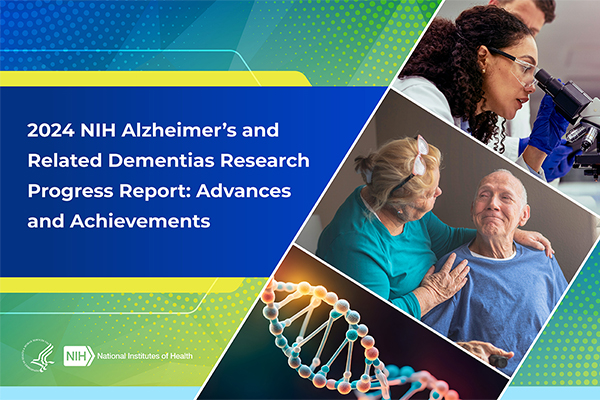
NIH Scientific Progress Report 2024
The NIH report provides an overview of the meaningful progress researchers made over the past year in areas including drug development, lifestyle interventions, biomarker research, and more.
References
- Rajan KB, et al. Population estimate of people with clinical Alzheimer’s disease and mild cognitive impairment in the United States (2020-2060) . Alzheimer’s & Dementia. 2021;17(12):1966-1975. doi: 10.1002/alz.12362.
- World Health Organization. Dementia . Accessed June 12, 2024.