 An official website of the United States government




In 2023, the NIBIB communications team covered a wide variety of advances supported by the institute, from basic research to novel ultrasound applications to at-home monitoring and diagnostics. We present here a sample of some of the most-read articles written this year. We look forward to sharing more exciting science news about NIBIB-supported research in 2024!
None

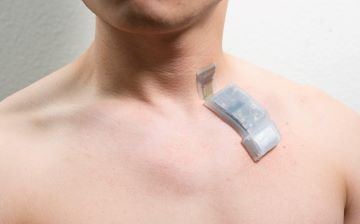
This fully wireless ultrasound patch, which can capture detailed medical information and transmit the data to a smart device, could represent a major step forward in at-home health care technology. Read all about it here .
Wireless wonder: wearable ultrasound patch goes completely cable-free Towards self-monitoring at home
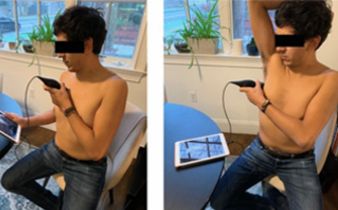
Research shows that patients could collect ultrasound images in the comfort of their own homes.
Ultrasound selfies: patients produce images at home https://www.nibib.nih.gov/news-events/newsroom/ultrasound-selfies-little-training-patients-could-produce-high-quality-medical-images-home
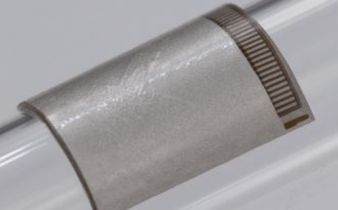
This cardiac ultrasound imager can non-invasively capture real-time images of the heart.
A stretchable, wearable patch for cardiac ultrasound https://www.nibib.nih.gov/news-events/newsroom/stretchable-wearable-patch-cardiac-ultrasound
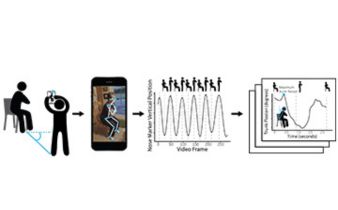
This online tool can analyze self-collected, at-home videos with a smartphone to predict disease.
At-home videos for musculoskeletal health https://www.nibib.nih.gov/news-events/newsroom/home-videos-assess-musculoskeletal-health
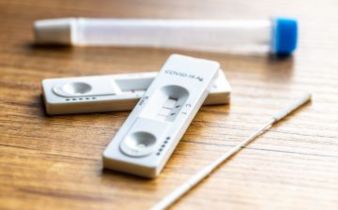
Research shows that repeat testing every other day increases the detection of the SARS-CoV-2 virus.
NIH study informs repeat antigen testing https://www.nibib.nih.gov/news-events/newsroom/nih-study-informs-antigen-testing-sars-cov-2-virus Interventions on the horizon
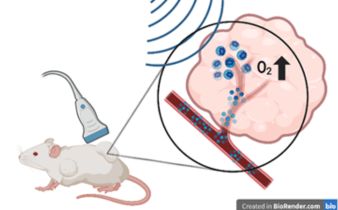
Early research may offer a way to break through cancer’s hypoxia-induced defenses by delivering oxygen to tumors to combat resistance to radiation.
Delivering oxygen using ultrasound https://www.nibib.nih.gov/news-events/newsroom/delivering-oxygen-tumors-may-be-key-overcoming-radiation-therapy-resistance
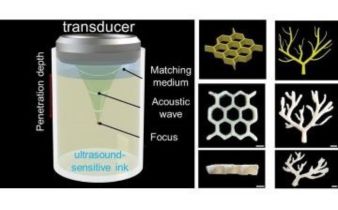
A collaborative team of researchers have outlined a method to print biocompatible structures through thick, multi-layered tissues using focused ultrasound.
Through-tissue 3D printing https://www.nibib.nih.gov/news-events/newsroom/getting-under-your-skin-3d-printing-technique-builds-structures-through-tissues
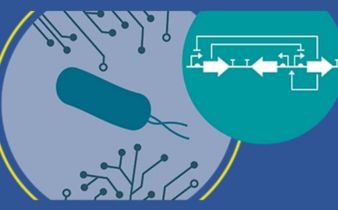
Synthetic biology engineers have designed and engineered bacteria that find and detect fragments of DNA shed from infectious pathogens.
Scientists engineer living DNA sensors https://www.nibib.nih.gov/news-events/newsroom/scientists-engineer-living-dna-sensors
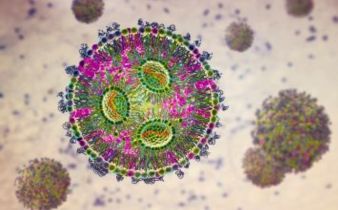
These nanoparticles are designed to carry mRNA specifically to the pancreas, which could pave the way for novel therapies for intractable pancreatic diseases.
Packaging mRNA for the pancreas https://www.nibib.nih.gov/news-events/newsroom/packaging-mrna-pancreas Biomedical imaging advances
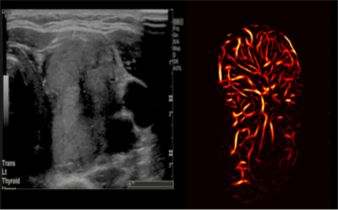
This cancer diagnostic method, which pairs cutting-edge ultrasound techniques with artificial intelligence, can accurately diagnose thyroid cancer.
Combining ultrasound with AI for cancer detection https://www.nibib.nih.gov/news-events/newsroom/how-combination-advanced-ultrasound-and-ai-could-upgrade-cancer-diagnostics
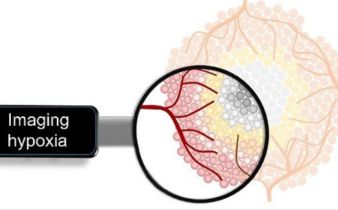
Researchers are developing new MRI contrast agents that are activated in low oxygen environments, enabling improved diagnosis and treatment of hypoxic conditions.
MRI contrast agent targets hypoxic disease https://www.nibib.nih.gov/news-events/newsroom/mri-contrast-agent-targets-hypoxic-disease
This interview with Maryellen Giger delves into the creation of the MIDRC imaging repository and how its data can be used to develop and evaluate AI algorithms.
The quest for ethical algorithms in medical imaging https://www.nibib.nih.gov/news-events/newsroom/quest-develop-fair-and-ethical-algorithms-medical-imaging
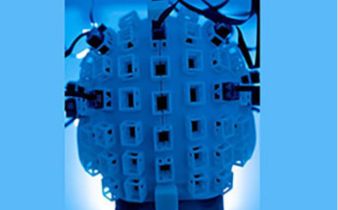
This new, wearable brain scanner is the first of its kind to accurately record the magnetic fields that are generated by human brain activity while the wearer is in motion.
Helmet with sensors records brain function https://www.nibib.nih.gov/news-events/newsroom/helmet-sensors-records-brain-function NIBIB program updates
NIH has launched the Home Test to Treat program, a virtual community health intervention that will provide free COVID-19 health services: at-home rapid tests, telehealth sessions and at-home treatments, in select areas.
NIH launches Home Test to Treat, a pilot COVID-19 telehealth program https://www.nibib.nih.gov/news-events/newsroom/nih-launches-home-test-treat-pilot-covid-19-telehealth-program

NIBIB has established the Center for Biomedical Engineering Technology Acceleration (BETA Center), a new intramural research program to solve a range of medicine’s most pressing problems.
Biomedical Engineering Technology Acceleration Center https://www.nibib.nih.gov/news-events/newsroom/nih-launches-intramural-bioengineering-center-foster-technology-collaboration-across-agency

The National Institutes of Health and the higher education non-profit VentureWell have selected 10 winners and five honorable mentions for the 2023 Design by Biomedical Undergraduate Teams (DEBUT) Challenge.
NIH selects undergraduate winners of 2023 DEBUT Challenge https://www.nibib.nih.gov/news-events/newsroom/nih-selects-undergraduate-winners-2023-debut-challenge-impressive-medical-device-designs
NIH will advance the development of home-based and point-of-care health technologies with awards to six technology research and development centers in the Point-of-Care Technology Research Network (POCTRN).
Point-of-Care Technology Research Network awards internal:/news-events/newsroom/nih-address-unmet-clinical-needs-testing-monitoring-treatment-technologies
Check out our top stories from 2022 !