 An official website of the United States government




COVID research, diagnostics projects gear up at NIH
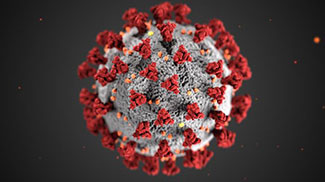
Illustration by CDC/Alissa Eckert, MS; Dan Higgins, MAMS
Focus on the Fogarty community's response to COVID-19
- Fogarty community responds to COVID-19 in many ways
- Former Fogarty grantee Dr Christian Happi leads COVID-19 genomics work in Africa
- Profile: Former Fogarty Scholar Dr Jessica Manning helps Cambodia respond to COVID
- Fogarty grantee Dr Manasi Kumar studies COVID impact on pregnant teens
- Fogarty Fellow Dr Dang Hoang Minh addresses COVID mental health needs in Vietnam
- Conducting research in a pandemic raises ethics issues
To help speed development and commercialization of COVID-19 testing technologies needed to ensure a safe reopening of society, the NIH has announced a $1.5 billion initiative, called the Rapid Acceleration of Diagnostics (RADx) . The NIH will also seek opportunities to move diagnostic technologies swiftly through the development pipeline toward commercialization and broad availability. Applicants with rapid testing technologies will compete in a rapid, three-phase selection process. Finalists will be matched with technical, business and manufacturing experts to increase the odds of success. The goal is to produce millions of accurate and easy-to-use tests by the end of this summer.
“We need all innovators, from the basement to the boardroom, to come together to advance diagnostic technologies, no matter where they are in development,” said NIH Director Dr. Francis S. Collins. “Now is the time for that unmatched American ingenuity to bring the best and most innovative technologies forward to make testing for COVID-19 widely available.”
The NIH also continues to ramp up clinical studies of COVID-19, including two that will examine pregnant women and children.
In a multipronged effort, researchers will analyze the medical records of up to 21,000 women to evaluate whether changes to healthcare delivery that were implemented as a result of the pandemic have led to higher rates of pregnancy-related complications and cesarean delivery . They also seek to establish the risk of pregnant women with COVID-19 infection transmitting the virus to their fetus. Newborns will be monitored and assessed until they are discharged from the hospital. In addition, the study will track more than 1,500 pregnant women confirmed with COVID-19 infection, monitoring their health for six weeks after childbirth.
Other NIH-funded researchers are evaluating drugs prescribed to treat COVID-19 in infants, children and adolescents . They will analyze blood samples collected from routine medical procedures to understand how the drugs move through the bodies of children, from newborns to adolescents under 21 years of age. The goal is to gather information to refine dosing and improve safety.
Both studies are supported by the Eunice Kennedy Shriver National Institute of Child Health and Human Development (NICHD).
More Information
- NIH mobilizes national innovation initiative for COVID-19 diagnostics
NIH news, April 29, 2020- NIH Rapid Acceleration of Diagnostics (RADx) initiative
- NIH Rapid Acceleration of Diagnostics (RADx) initiative funding opportunities
- NIH Rapid Acceleration of Diagnostics (RADx) pre-application webinars :
Friday, June 26, and Wednesday, July 1, 2020
Submit questions in advance by email. Registration required.
- NIH-funded study to investigate pregnancy outcomes resulting from COVID-19 pandemic
NIH news, May 19, 2020 - NIH-funded study to evaluate drugs prescribed to children with COVID-19
NIH news, June 10, 2020 - Coronavirus news, funding and resources for global health researchers compiled by Fogarty
To view Adobe PDF files, download current, free accessible plug-ins from Adobe's website .